How Tech Companies Are Using CSR to Build Circular Economies
When most people hear Corporate Social Responsibility, their minds immediately jump to smiling CEOs handing out donation cheques, planting a sapling or two, or sponsoring a school lunch program. And while those efforts are meaningful, the world has moved on. Especially when it comes to CSR in tech companies, the landscape has evolved from mere token gestures to full-blown ecosystem transformations.
Today, tech giants aren’t just giving back, they’re building forward. With the rise of circular economies, e-waste management, green tech solutions, and sustainable IT practices, CSR is becoming more strategic than ever. And if you’re wondering how, buckle up, we’re about to deep dive into a world where social impact meets smart business.
Traditional CSR often revolved around philanthropy: donations to NGOs, scholarships, or charity drives. But now, companies are realizing that their core business operations can drive far greater change.
What Is a Circular Economy?
Circular models aim to reuse, refurbish, recycle, and regenerate. It’s about closing the loop, keeping resources in use for as long as possible.
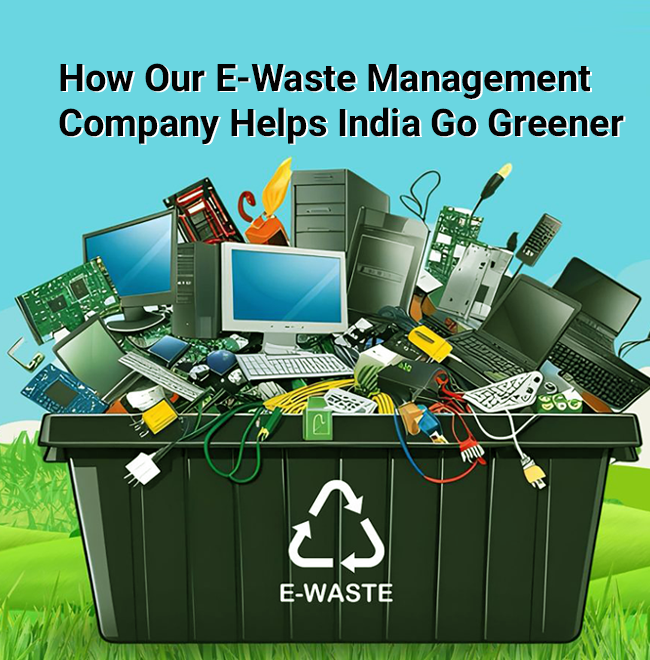
Now, think about how much electronic waste we generate. Old phones, out-of-warranty laptops, last-gen servers, the list goes on. In fact, the world produces over 50 million tonnes of e-waste annually. That’s the weight of 4,500 Eiffel Towers. No kidding.
This is where CSR in tech companies can play a starring role. They’re not just responsible for creating tech, they’re now accountable for what happens after that tech retires.
CSR in Tech Companies: From Boxed Devices to Regenerative Design
1. Product Lifecycle Management: A CSR Power Tool
Gone are the days when a device’s journey ended at the landfill. Through extended product life cycles, companies are designing products that are easier to repair, upgrade, and recycle.
Think of Apple’s trade-in programs, Dell’s sustainable packaging, or HP’s cartridge recycling. These aren’t just green gimmicks; they’re strategic CSR initiatives that reduce carbon footprints while saving money in the long term. More importantly, they signal a shift in mindset, from throwaway to thoughtful.
2. Green Manufacturing Practices
The production of gadgets is energy-intensive and resource-heavy. That’s why tech CSR programs are now focused on renewable energy usage, recycled raw materials, and low-impact manufacturing.
Brands like Microsoft have committed to becoming carbon negative by 2030. They’re investing in carbon removal, clean energy, and yes, circular processes.
3. E-Waste Recycling and Refurbishment Programs
E-waste recycling is now central to CSR in tech companies, not just an afterthought. Tech firms are partnering with ITAD (IT Asset Disposition) providers to safely collect, dismantle, refurbish, and redeploy old hardware. These programs don’t just reduce landfill, they unlock hidden value from devices that still have life in them.
How Startups and SMEs Can Join the Circular Party Too
While big tech giants grab headlines with grand sustainability pledges, it’s actually the small and mid-sized tech firms that are reshaping the real-world impact of Corporate Social Responsibility (CSR) in surprisingly practical ways.
With less bureaucracy and faster decision-making, these companies are often more nimble in integrating green practices. Let’s break down how they’re driving circular economy goals without needing billion-dollar budgets.
Partnering with E-Waste Recycling Vendors
These partnerships offer a structured, compliant, and secure way to dispose of electronics. Companies benefit from proper data sanitization, asset tracking, and environmental certificates, all while ensuring that reusable components are recovered and harmful substances are responsibly handled.
This not only reduces environmental liability but also aligns companies with national and global e-waste compliance regulations such as EPR (Extended Producer Responsibility).
Offering Refurbished Hardware as Affordable Alternatives to Clients
More tech firms are realizing that offering refurbished IT hardware isn’t just a cost-saving measure, it’s a strategic sustainability move. By extending the life of laptops, desktops, and other devices through professional refurbishment, companies can deliver affordable solutions to budget-conscious clients without compromising on performance.
This practice also reduces the demand for new electronics, conserving rare earth metals and decreasing carbon emissions from manufacturing. When communicated transparently, it enhances brand reputation and reflects well on CSR reports.
Educating Customers About Sustainable Tech Choices
Education is a powerful tool in sustainability, and forward-thinking tech firms are taking that responsibility seriously. They’re creating awareness about topics like energy-efficient computing, cloud storage versus physical servers, and the importance of device lifecycle planning.
Whether through blogs, webinars, or customer onboarding materials, these companies are helping clients make informed choices that are better for the planet. Some even build in sustainability calculators to show clients the carbon savings from renting, buying refurbished, or optimizing their IT infrastructure.
Embedding Sustainability into Supply Chains and Vendor Relationships
Increasingly, small and mid-tier tech companies are vetting their suppliers and partners not just on cost or speed, but on their environmental impact. From sourcing low-emission logistics providers to choosing eco-certified hardware components, the goal is to create a ripple effect across the value chain. Many firms are even encouraging vendors to follow green policies or offering incentives for partners that meet specific sustainability benchmarks.
How Tech is Building Infrastructure for Circular Economies
Building a circular economy isn’t just about recycling more, it’s about reimagining the entire tech ecosystem. And thanks to CSR partnerships in tech companies, the wheels are turning faster than ever.
Circular Design
In today’s sustainability-driven landscape, tech companies are moving away from traditional product design that prioritizes sleek aesthetics at the cost of repairability. Instead, they’re embracing circular design principles, where the focus is on creating products that last longer, are easier to repair, and can be upgraded over time.
This approach often involves using modular components, parts that can be replaced or improved independently without discarding the entire device. Think of it like building blocks: if your battery, screen, or storage fails, you just replace that one piece instead of sending the whole device to the landfill.
One of the most significant shifts in circular design is the reduction of permanent adhesives and welded casings, which have traditionally made disassembly nearly impossible without damaging internal parts. Now, devices are being built with standard screws, snap-fit designs, and accessible layouts that allow technicians, and even end-users in some cases, to perform repairs or upgrades easily.
This shift not only supports the right-to-repair movement but also empowers users to extend the lifecycle of their gadgets. For manufacturers, it reduces environmental impact while creating opportunities for refurbishing, remanufacturing, and resale, fitting seamlessly into the broader circular economy model.
Reverse Logistics
This system focuses on the return flow of goods, collecting used, outdated, or faulty devices from consumers and businesses, then transporting them back through the supply chain for refurbishment, reuse, or responsible recycling. It’s not just about waste management; it’s about recovering value from products that still have usable life left in them.
For tech brands, implementing reverse logistics means more than just managing returns; it’s about building an ecosystem where nothing goes to waste unnecessarily. Returned gadgets can be assessed, cleaned, repaired, and reintroduced into the market at lower price points, giving them a second life and expanding access to affordable technology.
This approach not only reduces e-waste and environmental burden but also creates new revenue streams and job opportunities in refurbishment and logistics.
Repair Networks
As the Right-to-Repair movement gains traction across the globe, a growing number of tech companies are aligning their CSR initiatives with the demand for accessible, affordable repair options. Rather than encouraging consumers to toss out malfunctioning devices, these companies are supporting the development of local repair networks, authorized or community-based service centers that can fix everything from cracked screens to faulty motherboards.
This approach not only extends the life of electronic products but also reduces the volume of e-waste entering the environment, helping brands lower their carbon footprint and meet sustainability goals.
What makes this model even more impactful is its ability to empower small repair businesses and technicians, especially in emerging markets. By providing training, access to original spare parts, and repair documentation, tech firms are giving local entrepreneurs the tools they need to thrive.
These decentralized repair ecosystems also make it easier for consumers to maintain their devices affordably, breaking the costly cycle of replacement and disposal. In essence, repair networks are where sustainability meets social impact, fostering resilience in both technology and communities.
Second-Life Solutions
In a world where technology evolves quickly and devices are retired faster than ever, second-life solutions offer a meaningful way to bridge the digital divide while reducing environmental waste. Many tech companies, as part of their CSR programs, are refurbishing and repurposing old equipment, like laptops, servers, and monitors, for use in schools, non-profits, rural institutions, and community centers.
These redeployments help underfunded organizations access reliable technology without the financial burden of purchasing brand-new hardware, while simultaneously keeping electronic waste out of landfills.
What sets these initiatives apart is their ability to create inclusive digital growth. A used corporate laptop might become a student’s first exposure to coding. An old office server could help a local NGO run essential services more efficiently.
Even refurbished monitors can transform a bare-bones classroom into a connected learning space. By giving pre-owned tech a second chance, companies are not only cutting down their carbon impact but also enabling social upliftment through technology.
CSR Reporting and Transparency
Modern consumers aren’t easily impressed by PR buzzwords. They want transparency, accountability, and proof. That’s why tech companies are now publishing sustainability reports, tracking carbon emissions, listing e-waste recovery metrics, and openly discussing CSR goals.
GreenTek Reman offers certified recycling and recovery data to clients, helping them track their environmental impact and meet ESG targets – your one-stop CSR Service Solution.
Final Thoughts
CSR in tech companies has moved well beyond writing cheques. It’s now about rewiring systems, reimagining impact, and redefining growth. From design labs to data centers, from refurbished desktops to circular logistics, the future of CSR is both smart and sustainable.
And for companies looking to get serious about circular IT infrastructure, GreenTek Reman is proving that responsible technology is not only possible, it’s profitable, scalable, and vital.