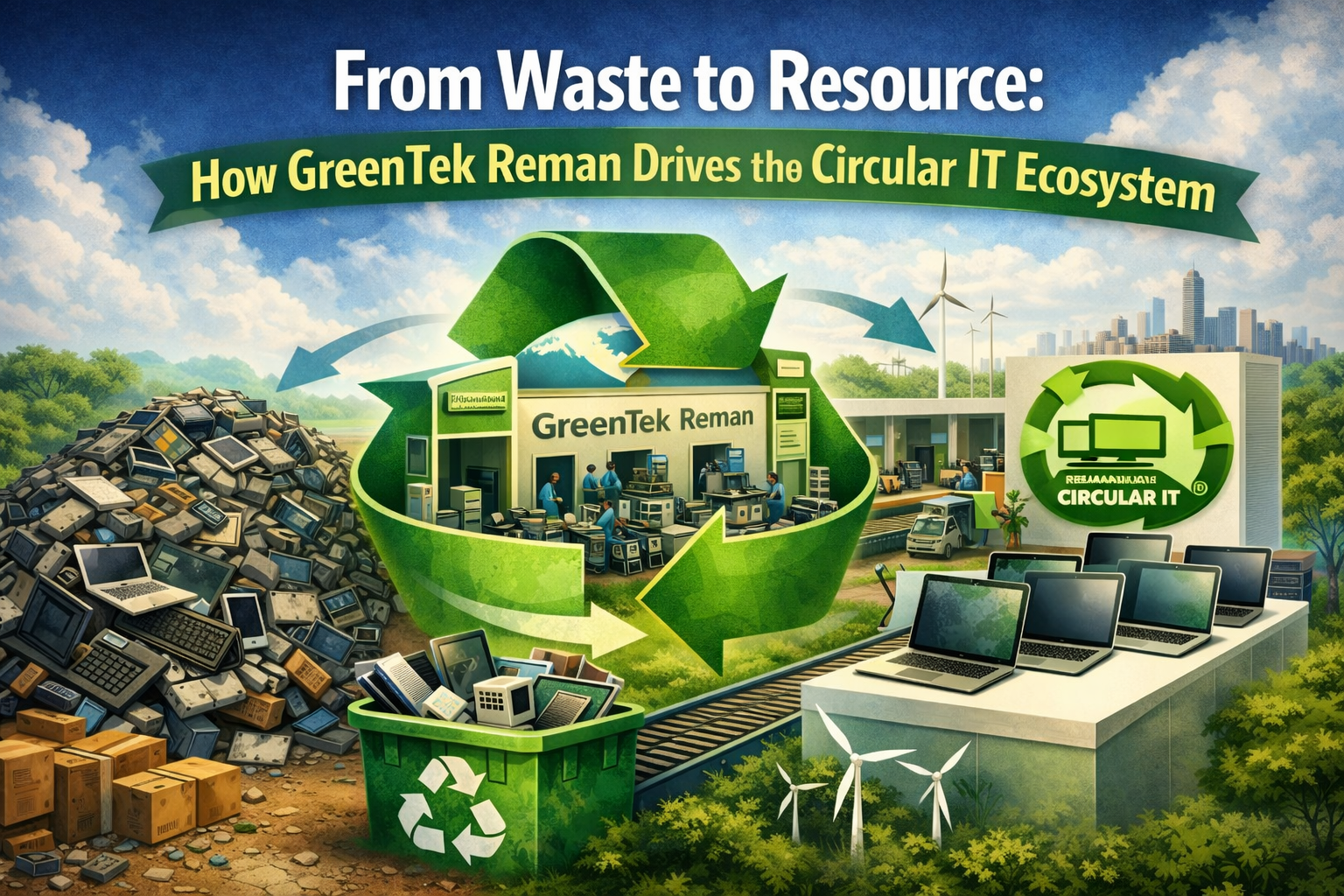
From Waste to Resource: How GreenTek Reman Drives the Circular IT Ecosystem
Old computers, mobile phones, networking equipment, servers, and many other electronic devices are being replaced very quickly. This creates millions of tonnes of e-waste every year. India is one of the top countries in the world for generating e-waste, producing large amounts of discarded electronics annually.
This growing e-waste is not only harmful to the environment but also a chance to use resources more wisely. Instead of throwing electronics away, burning them, or letting them pile up, smart initiatives are turning e-waste into something useful.
Circular IT systems aim to make technology last longer, recover valuable materials, and reduce harm to the environment. The main goal is to reduce, reuse, and recycle electronic devices safely and responsibly.
In this blog, we explore the evolving landscape of e-waste management, the principles of the circular IT ecosystem, and the key role companies like GreenTek Reman play in driving sustainable IT practices nationwide.
Why E-Waste Management Is Urgent for Businesses and the Environment
Electronic waste is not just regular garbage. It contains harmful substances like lead, mercury, cadmium, and flame retardants. If e-waste is thrown away carelessly, these chemicals can get into the soil and water. At the same time, e-waste has valuable materials like gold, silver, copper, aluminum, and rare metals. These materials are becoming rare and expensive to mine.
In the traditional “take, make, dispose” system, products are made, used, and then dumped in landfills. This approach causes pollution and wastes natural resources. In today’s world, where protecting the environment is very important, this system cannot continue.
To address this, countries including India have made stricter e-waste rules. These rules require safe disposal, responsible recycling, and following environmental standards. They encourage businesses and people to manage electronic devices carefully throughout their life.
Understanding the Circular IT Ecosystem
A circular economy tries to keep products and materials in use for as long as possible. It focuses on getting the most value from them before recovering or regenerating them at the end of their life.
For Information Technology, this means moving away from the usual “use and throw” system. Instead, IT hardware is reused, refurbished, repurposed, or recycled to save resources and protect the environment.
The circular IT system is based on four main ideas:
- Reduction – Avoiding waste by using devices efficiently and making them last longer.
- Reuse and Refurbishment – Getting used IT equipment ready for reuse instead of throwing it away.
- Recycling and Recovery – Taking valuable metals and parts from old or broken devices to reduce the need for new raw materials.
- Responsible Disposal – Handling hazardous materials safely according to environmental rules.
By following these steps, natural resources are saved and environmental damage is reduced. Circular IT also encourages new ways to repair, remanufacture, and manage IT equipment throughout its lifecycle.
The Life Cycle of IT Assets in a Circular Model
To understand why circular IT is valuable, it helps to look at how IT devices are managed during their life cycle:
- Acquisition and Use – Devices are bought and used for business tasks. Asset tracking and lifecycle management help businesses keep control and visibility.
- Maintenance and Upgrade – Instead of throwing away old equipment, businesses repair it, upgrade it, or replace parts to make it last longer.
- End of Life (EOL) Evaluation – When devices can no longer be used effectively, they are checked to see if they can be refurbished or should be recycled.
- Refurbishment and Reuse – Devices that still work are repaired, tested, and reused either within the same company or through resale or donations.
- Recycling and Recovery – Devices that cannot be fixed are broken down, and valuable materials like metals, plastics, and glass are recovered to make new products.
This cycle reduces waste and helps supply chains by reusing materials that would otherwise be costly or harmful to extract.
The Environmental Impact of E-Waste and Resource Recovery
Electronic waste poses a double challenge: environmental pollution and resource scarcity. When e-waste winds up in landfills or informal recycling sectors, toxic substances can contaminate water and soil, pose health risks, and release harmful emissions. At the same time, the extraction of virgin materials for new electronics contributes to habitat destruction, greenhouse gas emissions, and energy consumption.
Circular IT practices address both sides of this equation. By refurbishing and reusing devices, energy consumption associated with manufacturing new equipment is reduced. And by recycling components, businesses can reclaim materials like gold, copper, and rare earth elements, conserving natural resources and reducing the environmental cost of mining.
Recovering these materials is not just economically beneficial, it’s environmentally significant. Precious metal recovery processes ensure that valuable elements in obsolete electronics aren’t lost, helping to reduce the pressure on natural ecosystems. Recycling reduces the volume of e-waste sent to landfills and supports downstream industries that depend on reclaimed materials.
The Role of Secure Data Management in Circular IT
An essential but often overlooked aspect of circular IT is secure data handling. When IT assets reach the end of their service life, they may still contain sensitive information that must be protected. Without proper data sanitization and destruction processes, businesses expose themselves to risks such as data breaches and regulatory non-compliance.
Secure data erasure techniques, such as degaussing, overwriting, and physical destruction of storage media, are critical to ensuring that devices are safely prepared for reuse or recycling. Circular IT service providers implement robust protocols and documentation to protect data privacy throughout the asset disposition process.
Data sanitization is not just a technical requirement, it is a trust-building practice that enables organizations to engage in circular reuse confidently and responsibly.
How Reverse Logistics Powers the Circular IT Ecosystem
Reverse logistics is the process of moving products from the user back to the manufacturer or to special facilities for processing. In circular IT, reverse logistics is very important. It helps businesses collect old electronics, take them to refurbishment or recycling centers, and track them at every step.
A good reverse logistics system can:
- Collect devices from many locations across the country.
- Inspect and sort devices based on their condition.
- Coordinate between companies and recycling centers.
- Provide clear tracking and reporting throughout the process.
Well-organized reverse logistics makes it easier to recover devices and materials. It also helps save money by reducing delays and handling costs, making the circular IT model more efficient.
GreenTek Reman: Driving Circular IT with Purpose
At the forefront of the circular IT ecosystem in India stands GreenTek Reman, a pioneer in e-waste management and IT Asset Disposition (ITAD) services. With nearly a decade of experience in the industry, GreenTek Reman has built a comprehensive service portfolio that supports the entire lifecycle of IT assets, from secure data sanitization to recycling and precious material recovery.
What sets GreenTek Reman apart is its commitment to executing the principles of reduce, reuse, and recycle with transparency, compliance, and technical excellence. Recognized as Asia-Pacific’s first R2v3 certified ITAD and e-waste management company, it adheres to internationally accepted standards that cover data protection, environmental responsibility, repair protocols, and downstream recycling practices.
The company’s services include secure IT asset disposition, environmentally responsible e-waste recycling, precious metal recovery processes, solar panel recycling, and product destruction. These offerings enable businesses to manage obsolete technology in ways that protect sensitive data, reduce environmental harm, and recover valuable materials.
GreenTek Reman’s infrastructure in Greater Noida is equipped to handle a wide range of electronic equipment, from consumer gadgets to large IT & networking systems, ensuring that valuable components are either refurbished for reuse or recycled responsibly. With registrations under the State Pollution Control Board, Central Pollution Control Board, and the Ministry of Environment, Forest, and Climate Change, the company’s operations align with India’s environmental regulations and global best practices.
Additionally, GreenTek Reman supports reverse logistics capabilities that make collection and processing efficient across multiple locations, enabling organizations to seamlessly incorporate circular IT practices without logistical headaches. By combining technical expertise with sustainability goals, the company helps businesses meet regulatory requirements and strengthen their CSR initiatives.
Conclusion
The problem of electronic waste is complex, but it also presents an unprecedented opportunity to rethink how technology is consumed, managed, and repurposed. From landfill hazards and resource scarcity to data security and compliance concerns, each aspect of e-waste management intersects with broader environmental and business challenges.