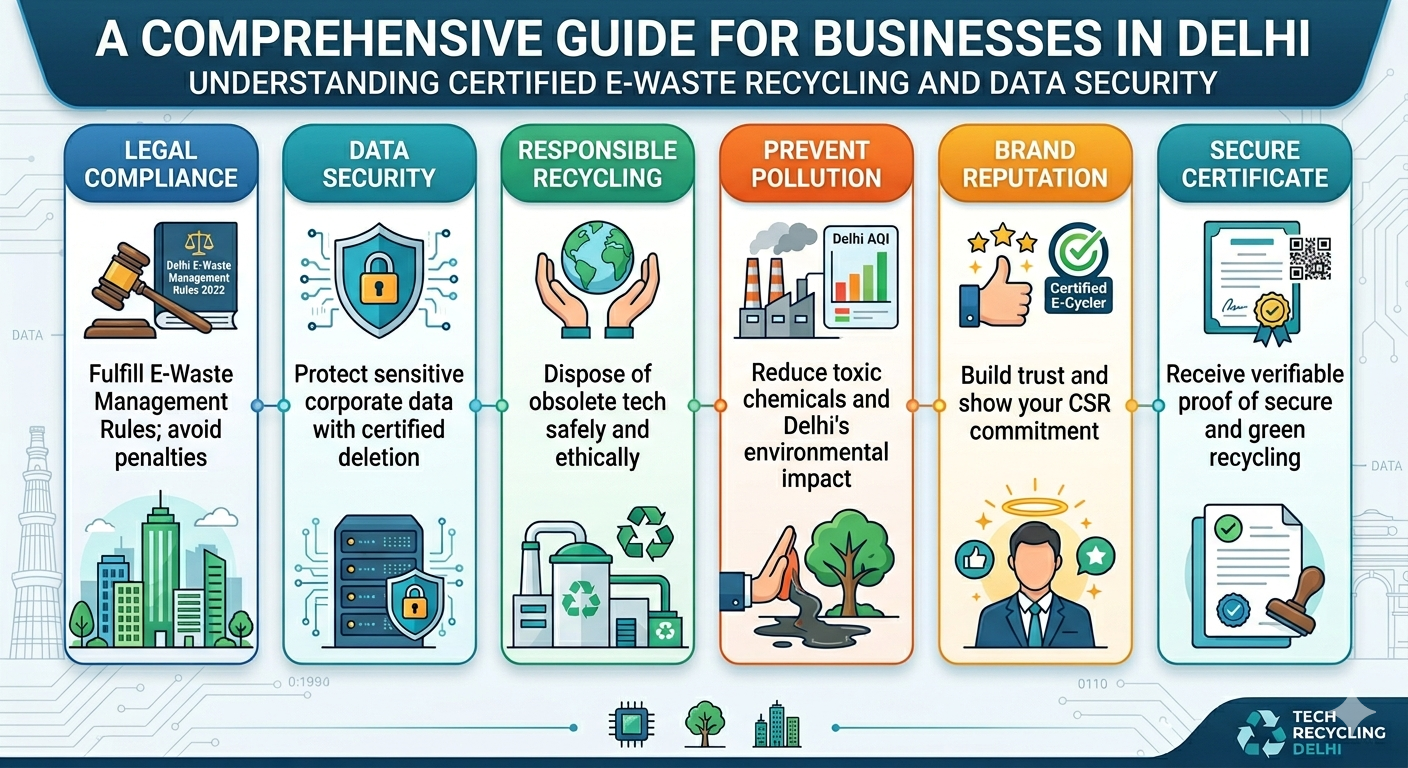
Why Businesses in Delhi Need Certified E-Waste Recycling Services
Delhi is one of India’s largest commercial and technology-driven cities. Thousands of businesses across industries rely on computers, servers, networking devices, printers, and other electronic equipment to maintain productivity and efficiency. While these technologies are essential for modern operations, they also generate a growing challenge that organizations must address responsibly: electronic waste.
Electronic waste, commonly known as e-waste, includes discarded electronic devices and components that have reached the end of their functional life. As companies upgrade their technology infrastructure regularly, large quantities of outdated or damaged equipment accumulate in offices. Without proper disposal processes, these devices can create serious environmental, legal, and data security risks.
For businesses operating in a highly regulated and environmentally conscious environment like Delhi, adopting responsible e-waste management practices is becoming increasingly important. Certified recycling services play a critical role in ensuring that electronic waste is handled safely, in compliance with regulations, and with minimal environmental impact.
This article explores why businesses in Delhi must rely on certified service providers to recycle e-waste responsibly and how proper electronic waste handling benefits organizations, communities, and the environment.
The Growing E-Waste Challenge in Delhi’s Business Environment
Delhi is home to a large concentration of corporate offices, technology companies, financial institutions, and government organizations. These entities depend heavily on electronic equipment to support daily operations. As digital transformation continues to accelerate, businesses frequently upgrade devices to maintain efficiency and competitiveness.
However, each upgrade generates old or obsolete equipment that needs to be managed responsibly. Office e-waste can include desktops, laptops, servers, monitors, networking equipment, printers, cables, batteries, and mobile devices.
Improper disposal of these items can lead to environmental contamination and potential regulatory violations. Electronic equipment often contains hazardous materials such as lead, mercury, and certain chemicals that must be handled carefully during disposal.
With increasing awareness about environmental sustainability and stricter regulations surrounding electronic waste disposal, businesses in Delhi must adopt professional e-waste recycling practices to avoid negative consequences.
Certified recycling services refer to professional organizations authorized to collect, process, and recycle electronic waste in compliance with environmental regulations and industry standards. These companies operate under guidelines established by government authorities to ensure that electronic waste is handled responsibly. Certified providers typically offer end-to-end solutions that include the collection of equipment, secure transportation, data destruction, dismantling, recycling, and regulatory documentation.
Environmental Impact of Improper Electronic Waste Disposal
Improper electronic waste disposal can have serious environmental consequences. Many electronic devices contain materials that can pollute soil, air, and water if they are not processed correctly.
When electronic waste is dumped in landfills or handled through informal recycling channels, hazardous substances can seep into the environment. These toxins may contaminate groundwater and pose health risks to surrounding communities. Responsible e-waste management ensures that harmful materials are removed safely while valuable resources are recovered for reuse.
Certified recycling facilities use specialized equipment and processes to extract metals, plastics, and other materials from discarded electronics. These recovered resources can be reused in manufacturing, reducing the demand for raw materials and minimizing environmental damage caused by mining and industrial production.
Compliance with Government Regulations
India has established regulatory frameworks that govern the handling and disposal of electronic waste. These regulations require businesses to ensure that discarded electronic equipment is processed through authorized recycling channels. Companies that fail to comply with these regulations may face penalties, legal complications, or reputational damage.
Certified recyclers help organizations meet regulatory requirements by providing documented evidence of responsible electronic waste disposal. This documentation often includes certificates of recycling, asset tracking records, and compliance reports. These records are important for internal audits, sustainability reporting, and demonstrating compliance during regulatory inspections.
For businesses operating in sectors such as finance, healthcare, telecommunications, and government services, maintaining compliance with environmental regulations is essential. Professional recycling services simplify this process and ensure that organizations meet their legal obligations.
Protecting Sensitive Business Data
Another important reason businesses require certified recycling services is data protection. Many electronic devices contain sensitive information even after they are no longer in use.
Computers, servers, storage drives, and mobile devices may hold confidential customer data, financial records, internal communications, and intellectual property. If these devices are discarded without proper data destruction procedures, the information may be recovered by unauthorized individuals.
Secure data destruction is a key component of responsible e-waste recycling services. Certified providers use specialized methods to ensure that all data stored on retired devices is permanently removed before the equipment is recycled or refurbished.
These methods may include software-based data wiping, degaussing, or physical destruction of storage media. By implementing secure data destruction processes, businesses can protect sensitive information while responsibly disposing of outdated hardware.
Improving Workplace Safety and Organization
Accumulated electronic waste can create safety and organizational challenges within office environments. Old computers, cables, batteries, and other equipment often occupy valuable storage space. Improperly stored electronics can become fire hazards or cause workplace clutter that affects productivity.
Professional recycling services help businesses remove obsolete equipment efficiently, freeing up office space and improving workplace organization. Regular recycling programs ensure that outdated devices are removed promptly and processed through appropriate channels.
Encouraging the Circular Economy
The circular economy is an economic model focused on reducing waste and maximizing resource efficiency. Instead of discarding products after use, materials are recovered and reused in new production cycles. E-waste recycling plays a critical role in supporting this model. Electronic devices contain valuable materials such as copper, aluminum, gold, and rare earth metals that can be recovered and reused in manufacturing.
Certified recycling facilities specialize in extracting these materials through environmentally responsible processes. By participating in responsible recycling programs, businesses contribute to the circular economy and help reduce the environmental impact of electronic manufacturing.
This approach ensures that valuable resources remain in circulation rather than being lost through improper disposal.
Greentek Reman: Supporting Responsible E-Waste Recycling in Delhi
When businesses look for reliable partners to handle their electronic waste responsibly, experience and compliance expertise are essential. Greentek Reman has established itself as a trusted organization providing professional electronic waste recycling solutions for businesses across various industries.
The company focuses on delivering comprehensive e-waste management services designed to help organizations handle their obsolete electronic equipment in an environmentally responsible manner.
Greentek Reman follows structured recycling processes that ensure safe collection, secure transportation, responsible dismantling, and proper material recovery from discarded devices.
One of the key strengths of the company lies in its commitment to regulatory compliance and environmental sustainability. By adhering to industry standards and government regulations, Greentek Reman ensures that businesses can recycle e-waste without facing legal or environmental risks.
The company also supports organizations in maintaining secure data handling practices during the recycling process, helping protect sensitive business information.
Through its responsible recycling solutions and dedication to sustainability, Greentek Reman continues to help businesses in Delhi manage electronic waste efficiently while contributing to a cleaner and safer environment.
Conclusion
As technology continues to evolve, electronic waste has become an unavoidable byproduct of modern business operations. Companies regularly upgrade devices to improve productivity, but these upgrades create large volumes of obsolete electronic equipment that must be handled responsibly.
For businesses in Delhi, adopting certified e-waste recycling services is essential for protecting the environment, complying with regulations, and safeguarding sensitive data.