How IT Asset Disposition Helps Companies Protect Sensitive Data
From customer records and employee information to financial documents and intellectual property, companies manage enormous volumes of sensitive information every day. While organizations often focus heavily on cybersecurity during the active life cycle of their devices, many overlook one of the most critical stages of data protection, the disposal of outdated IT equipment.
Computers, servers, laptops, storage devices, and networking hardware continue to store confidential information even after they are no longer in use. Improper disposal of these assets can expose businesses to data breaches, compliance violations, financial losses, and reputational damage. This is where IT Asset Disposition Services become essential for modern organizations.
A structured and secure approach to IT asset disposal ensures that outdated equipment is managed responsibly while protecting valuable business information. Companies across industries are increasingly adopting professional disposition strategies to minimize security risks, meet environmental responsibilities, and recover residual value from old hardware.
Understanding IT Asset Disposition
IT asset disposition refers to the process of retiring, managing, and disposing of obsolete or unused IT equipment in a secure and environmentally responsible manner. This process includes data destruction, equipment collection, transportation, recycling, refurbishment, remarketing, and documentation.
Businesses often replace devices because of technological upgrades, operational scaling, remote work adoption, or hardware failures. However, disposing of these devices without proper procedures can leave sensitive information vulnerable to misuse.
Professional IT Asset Disposition Services help organizations safely handle retired technology assets while ensuring compliance with industry regulations and sustainability standards. Instead of simply discarding old devices, companies can implement a secure process that protects data and reduces environmental impact.
Why Data Security Risks Increase During Device Disposal
Many organizations assume deleting files or formatting a hard drive is enough to erase data permanently. In reality, data can often be recovered from improperly wiped devices using readily available recovery tools. Even damaged or outdated storage devices may still contain retrievable information.
When old hardware is sold, donated, recycled, or discarded without proper sanitization, businesses risk exposing:
- Customer information
- Financial records
- Employee details
- Intellectual property
- Login credentials
- Internal communications
- Vendor contracts
- Healthcare or legal data
Cybercriminals frequently target discarded electronics because they can contain highly valuable information. A single improperly disposed hard drive can lead to identity theft, financial fraud, ransomware attacks, or competitive data leaks.
This is why secure IT Asset Disposition Services have become a critical component of enterprise cybersecurity strategies.
The Role of Data Destruction in Protecting Sensitive Information
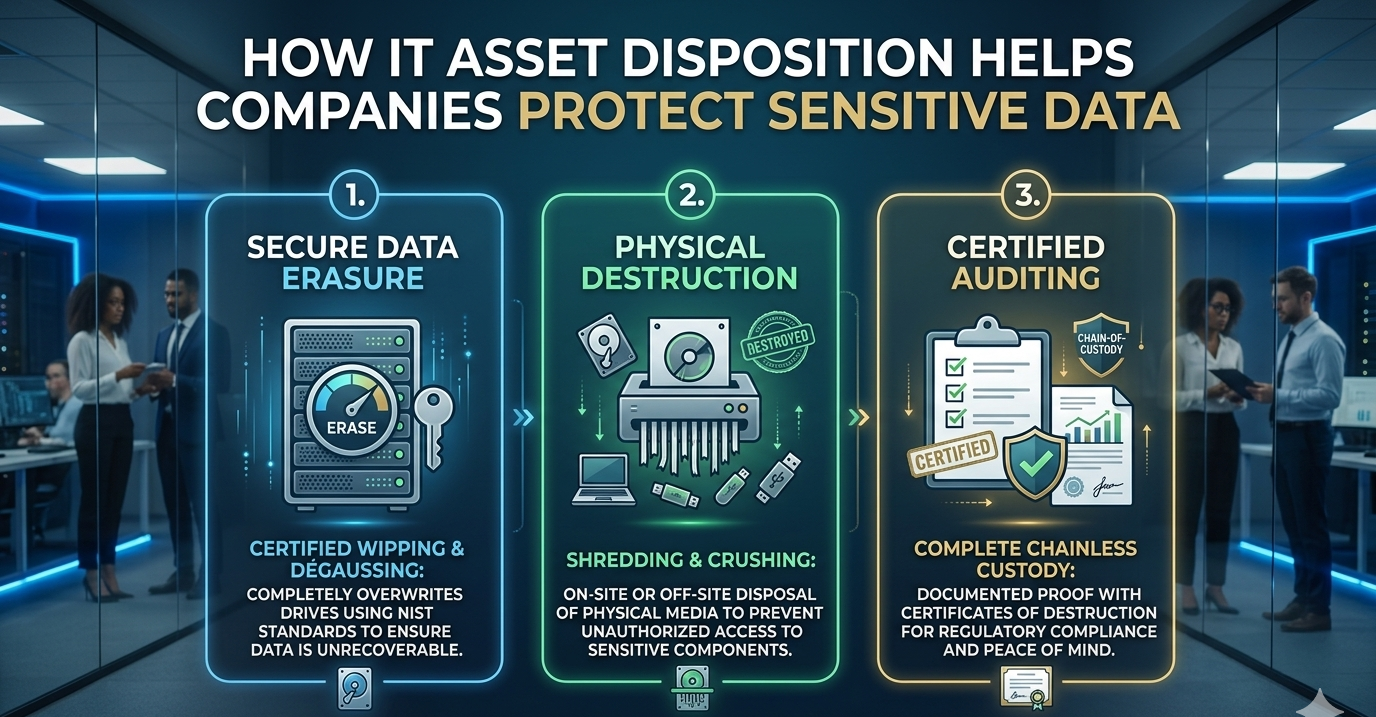
One of the most important aspects of IT asset disposition is secure data destruction. Organizations must ensure that all sensitive information is permanently erased before devices leave their premises.
Professional service providers use certified methods to destroy or sanitize data according to international standards. These methods may include:
Data Wiping
Data wiping involves overwriting existing information multiple times to make recovery impossible. This method is commonly used for devices that can be refurbished or resold.
Degaussing
Degaussing uses magnetic fields to erase data stored on magnetic drives. This process disrupts the storage medium and permanently destroys the information.
Physical Destruction
For highly sensitive data, physical destruction is often preferred. Hard drives, SSDs, tapes, and storage media are shredded, crushed, or dismantled to eliminate any possibility of data recovery.
Reliable IT Asset Disposition Services provide certificates of data destruction as proof that information has been securely removed. This documentation helps organizations demonstrate compliance during audits and regulatory reviews.
Compliance and Regulatory Requirements
Data protection regulations have become stricter across industries worldwide. Organizations that fail to secure sensitive information during equipment disposal can face severe penalties and legal consequences.
Several regulations require businesses to implement proper data disposal procedures, including:
- GDPR
- HIPAA
- PCI DSS
- ISO 27001
- SOX
- FACTA
Non-compliance can result in fines, lawsuits, operational disruptions, and reputational damage. Companies handling financial data, healthcare records, or personal customer information must be especially cautious when retiring IT assets.
Professional IT Asset Disposition Services help organizations align with regulatory standards by ensuring documented, secure, and traceable disposal processes.
Preventing Insider Threats and Unauthorized Access
Data breaches do not always originate from external hackers. Insider threats can also emerge during the disposal process if retired devices are not handled securely.
Employees, contractors, or third-party vendors with access to discarded equipment may intentionally or unintentionally expose confidential information. Without strict chain-of-custody procedures, organizations lose visibility over how assets are managed after removal.
Certified IT asset disposition providers implement secure logistics, tracking systems, and documented handling procedures to minimize risks throughout the disposal process.
This level of accountability ensures that every device is monitored from pickup to final disposition.
Environmental Responsibility and Sustainable Disposal
Electronic waste continues to grow at an alarming rate globally. Improper disposal of IT equipment contributes to environmental pollution because devices often contain hazardous materials such as lead, mercury, and cadmium.
Businesses today are under increasing pressure to adopt sustainable operational practices. Responsible IT disposal supports corporate environmental goals by reducing landfill waste and encouraging material recovery.
Professional IT Asset Disposition Services help companies recycle electronics responsibly while complying with environmental regulations. Components that can still function are refurbished and reused, while unusable materials are processed safely through certified recycling methods.
This approach supports the circular economy and reduces the environmental footprint of outdated technology.
Common Mistakes Companies Make During IT Disposal
Many organizations unknowingly create serious security and compliance risks because of improper IT asset disposal practices. One of the most common mistakes is storing outdated devices in offices, storage rooms, or warehouses for extended periods. Even when these devices are no longer in use, they may still contain sensitive business information, customer records, financial data, or login credentials. Over time, unattended equipment becomes vulnerable to theft, unauthorized access, or accidental misuse, increasing the chances of a data breach.
Another major issue is relying only on basic file deletion or factory resets before disposing of devices. Many businesses assume that deleting files permanently removes information, but in reality, data can often be recovered using specialized software tools. Similarly, working with uncertified or unverified disposal vendors can expose organizations to additional risks, as such providers may not follow secure data destruction methods or environmentally responsible recycling processes. This can result in both cybersecurity threats and environmental liabilities.
Ignoring compliance requirements and failing to maintain proper documentation are also common mistakes that can create long-term problems for businesses. Regulatory standards often require companies to follow secure disposal procedures and maintain records such as certificates of destruction and audit trails. Without proper documentation, organizations may struggle to prove compliance during audits or investigations. Avoiding these risks requires a well-structured and professionally managed IT asset disposition strategy that prioritizes security, compliance, accountability, and responsible disposal practices.
Benefits of Partnering With a Professional ITAD Provider
Managing the disposal of outdated IT equipment is far more complicated than simply removing old devices from the workplace. Organizations must ensure data security, regulatory compliance, environmental responsibility, and proper asset handling throughout the entire disposal process. Attempting to manage these tasks internally can consume valuable time, resources, and manpower, especially for businesses handling large volumes of IT assets.
Professional ITAD providers offer specialized expertise, certified processes, and advanced infrastructure that help organizations dispose of retired technology safely and efficiently. By partnering with experienced professionals, businesses can minimize risks while improving operational efficiency and sustainability outcomes.
Enhanced Data Security
One of the most important advantages of working with a professional ITAD provider is improved data protection. Retired devices often contain highly sensitive information such as financial records, customer data, employee details, login credentials, and confidential business documents. Simply deleting files or formatting drives does not completely erase this information.
Professional providers use certified data destruction methods such as data wiping, degaussing, and physical destruction to ensure information cannot be recovered. These processes follow industry-recognized standards and significantly reduce the risk of data breaches, cyber threats, and unauthorized access. Businesses can confidently retire their assets knowing their sensitive data has been permanently destroyed.
Regulatory Compliance
Modern businesses must comply with various data protection and environmental regulations when disposing of electronic assets. Regulations such as GDPR, HIPAA, PCI DSS, and ISO standards require organizations to follow secure disposal practices and maintain proper documentation.
Professional ITAD providers understand these compliance requirements and ensure that disposal procedures align with industry regulations. They provide certificates of destruction, recycling documentation, and audit-ready reports that help businesses demonstrate compliance during inspections or regulatory reviews. This reduces the risk of legal penalties, financial liabilities, and reputational damage associated with non-compliance.
Operational Efficiency
Managing IT asset disposal internally can place a significant burden on internal teams. Coordinating inventory management, logistics, data destruction, storage, transportation, and documentation requires time and specialized expertise. For growing organizations, this can divert attention away from core business operations.
Professional ITAD providers streamline the entire disposal process through organized workflows and efficient asset management systems. They handle collection, transportation, processing, reporting, and recycling activities in a structured manner. This allows businesses to save time, reduce administrative workload, and improve operational productivity while ensuring secure asset disposition.
Environmental Sustainability
Electronic waste has become a major environmental concern worldwide. Improper disposal of outdated electronics can lead to harmful substances entering landfills, causing soil, air, and water pollution. Businesses today are increasingly expected to adopt environmentally responsible practices as part of their sustainability commitments.
Certified ITAD providers follow eco-friendly recycling and refurbishment processes that help minimize environmental impact. Devices that can still function are refurbished or reused, while unusable components are recycled responsibly through approved facilities. This supports the circular economy by reducing electronic waste, conserving natural resources, and lowering the environmental footprint of technology disposal.
Financial Recovery
Many organizations overlook the residual value that outdated IT equipment may still hold. Laptops, desktops, servers, and networking devices often contain reusable components or can be refurbished for resale. Without professional assessment, businesses may miss opportunities to recover value from retired assets.
Professional ITAD providers evaluate the condition of equipment and identify assets suitable for refurbishment or remarketing. Through resale and recovery programs, organizations can generate financial returns from devices that would otherwise be discarded. This helps offset replacement costs and improves overall IT budget management.
Transparent Reporting
Accountability and traceability are essential during the IT asset disposal process. Businesses need clear visibility into how their retired equipment is handled from collection to final disposition. Without proper documentation, organizations may face difficulties during audits or compliance checks.
Professional ITAD providers maintain detailed records throughout the disposal lifecycle. These reports typically include asset inventories, serial number tracking, chain-of-custody documentation, data destruction certificates, and recycling reports. Transparent reporting provides businesses with complete assurance that their assets have been handled securely, responsibly, and in compliance with industry standards.
By outsourcing IT asset disposition activities to experienced specialists, organizations can focus on their primary business goals while reducing security risks, improving compliance, supporting sustainability initiatives, and maximizing operational efficiency.
Why Greentek Reman Is a Trusted Choice for Secure IT Asset Management
Greentek Reman has established itself as a reliable partner for organizations seeking secure, sustainable, and efficient IT asset management solutions. The company focuses on helping businesses responsibly manage retired technology assets while protecting critical data and supporting environmental goals.
With expertise in refurbishment, recycling, and secure disposal processes, Greentek Reman offers comprehensive solutions designed to meet modern business requirements. The company emphasizes secure handling procedures, environmentally responsible practices, and efficient asset recovery strategies.
One of the key strengths of Greentek Reman is its commitment to extending the lifecycle of IT equipment through refurbishment and sustainable reuse. This approach not only reduces electronic waste but also helps organizations maximize value from retired assets.
By combining data security, compliance-focused processes, and environmentally conscious operations, Greentek Reman supports businesses in building a safer and more sustainable technology ecosystem.
Conclusion
As businesses continue to generate and store increasing amounts of sensitive information, secure IT disposal has become more important than ever. Old laptops, servers, hard drives, and storage devices can become major security liabilities if they are not handled properly during retirement.