How Companies Can Manage Electronic Waste Responsibly
Electronic waste includes discarded electrical or electronic devices such as computers, printers, servers, mobile phones, batteries, and IT peripherals. These items often contain hazardous materials like lead, mercury, cadmium, and brominated flame retardants, which can pose serious risks to human health and the environment if not handled properly.
E-waste is one of the fastest-growing waste streams globally, and businesses are among the largest contributors. Managing it responsibly is no longer just an environmental concern; it is a regulatory, ethical, and strategic priority. Companies that adopt sustainable e-waste management practices not only reduce their environmental footprint but also strengthen their brand reputation and ensure compliance with evolving regulations.
When e-waste is improperly disposed of in landfills or through informal recycling channels, toxic substances can seep into soil and groundwater, leading to long-term environmental damage. Additionally, improper disposal contributes to air pollution when materials are burned to extract valuable components.
From a business perspective, unmanaged e-waste can lead to data security risks, legal penalties, and reputational damage. Therefore, adopting responsible e-waste management practices is both a necessity and an opportunity.
Why Responsible E-Waste Management Matters for Businesses
Responsible e-waste management goes beyond environmental responsibility. It plays a crucial role in shaping a company’s operational efficiency and compliance framework. Firstly, regulatory compliance is a key factor. Many countries, including India, have strict guidelines under E-Waste Management Rules that require businesses to handle electronic waste responsibly. Non-compliance can result in fines and legal complications.
Secondly, data security is a major concern. Discarded IT assets often contain sensitive company information. Without proper data destruction, organizations risk data breaches and cyber threats. Thirdly, sustainability has become a critical aspect of corporate social responsibility. Customers, investors, and stakeholders increasingly prefer businesses that demonstrate environmentally responsible practices.
Lastly, proper e-waste management can also lead to cost optimization. Through asset recovery, refurbishment, and recycling, companies can extract value from old equipment rather than treating it as waste.
Conducting an E-Waste Audit
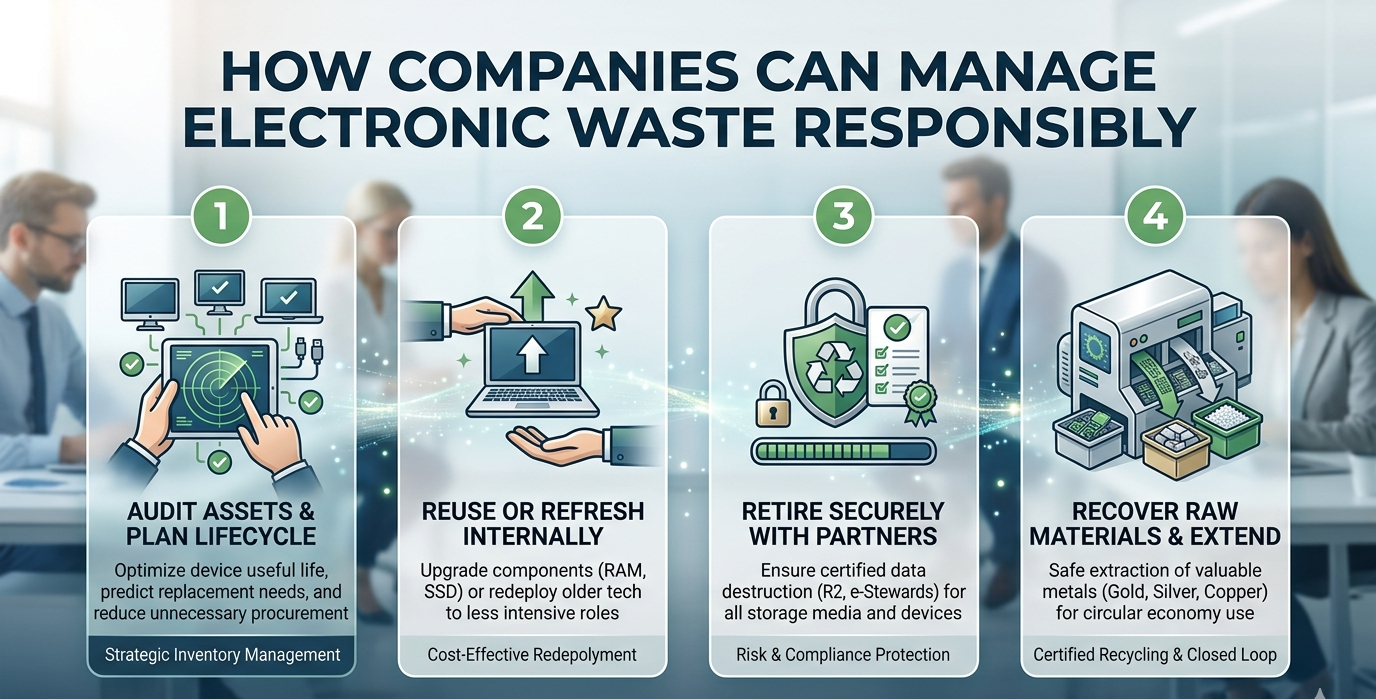
The first step toward responsible e-waste management is conducting a comprehensive e-waste audit. This involves identifying and documenting all electronic assets within the organization, including their lifecycle stage and disposal status.
An audit helps businesses understand the volume and type of e-waste they generate. It also highlights opportunities for reuse, refurbishment, or recycling. By maintaining an accurate inventory, companies can make informed decisions about asset disposal and replacement. Regular audits also ensure accountability and transparency, which are essential for compliance and reporting purposes.
Extending the Lifecycle of Electronic Devices
One of the most effective ways to reduce e-waste is by extending the lifecycle of electronic devices. Instead of frequently replacing equipment, companies can adopt strategies to maximize the usability of their existing assets.
Upgrading hardware components, installing updated software, and performing regular maintenance can significantly extend the life of IT equipment. This not only reduces waste but also lowers procurement costs.
Refurbishment is another valuable approach. Devices that are no longer suitable for primary use can be refurbished and redeployed within the organization or donated to other institutions. This supports sustainability while optimizing resource utilization.
Implementing a Robust IT Asset Disposition (ITAD) Strategy
IT Asset Disposition (ITAD) is a structured process for safely and responsibly disposing of obsolete or unwanted IT equipment. A well-defined ITAD strategy ensures that e-waste is handled in a secure, compliant, and environmentally friendly manner.
Key components of an effective ITAD strategy include secure data destruction, asset tracking, recycling, and documentation. Certified data wiping or physical destruction methods should be used to eliminate any risk of data leakage.
Partnering with professional ITAD service providers ensures that the disposal process meets industry standards and regulatory requirements. These providers also offer detailed reports and certifications, which are essential for audits and compliance.
Ensuring Secure Data Destruction
Data security is a critical aspect of e-waste management. Before disposing of any electronic device, it is essential to ensure that all data stored on it is completely and irreversibly destroyed.
Simple deletion or formatting is not sufficient, as data can often be recovered using specialized tools. Instead, companies should use certified data destruction methods such as data wiping, degaussing, or physical shredding of storage devices.
Maintaining proper documentation of data destruction processes provides assurance to stakeholders and helps organizations comply with data protection regulations.
Promoting a Circular Economy Approach
A circular economy focuses on minimizing waste and maximizing resource efficiency by keeping products and materials in use for as long as possible. Businesses can adopt this approach to manage e-waste more sustainably.
This includes practices such as reusing equipment, refurbishing devices, and recycling materials to create new products. By integrating circular economy principles into their operations, companies can reduce their environmental impact and contribute to sustainable development.
Additionally, businesses can explore take-back programs and buy-back initiatives, where old equipment is returned to manufacturers or service providers for reuse or recycling.
Employee Awareness and Training
Effective e-waste management requires active participation from employees. Organizations should educate their workforce about the importance of responsible disposal and the risks associated with improper handling of electronic waste.
Training programs can help employees understand how to segregate e-waste, follow disposal protocols, and ensure data security. Creating a culture of sustainability within the organization encourages responsible behavior and supports long-term environmental goals.
Clear internal policies and guidelines also play a vital role in ensuring consistency and compliance across departments.
Leveraging Technology for E-Waste Management
Technology can significantly enhance the efficiency of e-waste management processes. Asset management software, for example, helps organizations track the lifecycle of electronic devices, monitor usage, and plan timely disposal.
Digital tools can also streamline inventory management, data destruction tracking, and compliance reporting. By leveraging technology, businesses can improve transparency, reduce manual errors, and optimize their e-waste management strategies.
Automation and analytics further enable organizations to identify trends, forecast waste generation, and make data-driven decisions.
Compliance with E-Waste Regulations in India
In India, e-waste management is governed by the E-Waste Management Rules, which outline the responsibilities of producers, consumers, and recyclers. Businesses must ensure compliance with these regulations to avoid penalties and legal issues.
Key requirements include proper collection, storage, transportation, and disposal of e-waste. Companies are also required to maintain records and submit periodic reports to regulatory authorities.
Extended Producer Responsibility (EPR) is another important aspect, where manufacturers are responsible for the end-of-life management of their products. Businesses should collaborate with compliant partners to meet these obligations effectively.
Corporate Social Responsibility and E-Waste
E-waste management is an integral part of corporate social responsibility (CSR). Companies that actively engage in sustainable practices demonstrate their commitment to environmental protection and social well-being.
CSR initiatives related to e-waste may include community awareness programs, donation of refurbished devices, and support for recycling initiatives. These efforts enhance brand reputation and build trust among stakeholders.
Transparent reporting of sustainability efforts further strengthens credibility and accountability.
The Role of GreenTek Reman in Responsible E-Waste Management
When it comes to managing electronic waste responsibly, partnering with a trusted and certified service provider can make all the difference. GreenTek Reman stands out as a leader in the field of IT Asset Disposition (ITAD) and e-waste recycling in India.
The company offers end-to-end solutions that help businesses handle their electronic waste securely and sustainably. From asset collection and inventory management to secure data destruction and environmentally compliant recycling, their services are designed to meet the highest industry standards.
One of the key strengths of GreenTek Reman lies in its commitment to data security. By using certified data destruction methods, the company ensures that sensitive business information is completely eliminated, minimizing the risk of data breaches.
In addition, GreenTek Reman focuses on maximizing value recovery through refurbishment and reuse. By extending the lifecycle of IT assets, the company supports the principles of a circular economy while helping businesses reduce costs.
Their compliance-driven approach ensures that all processes align with regulatory requirements, providing clients with complete peace of mind. Detailed documentation and reporting further enhance transparency and accountability.
With a strong emphasis on sustainability, innovation, and customer-centric solutions, GreenTek Reman enables organizations to transform their e-waste management practices into a strategic advantage.
Conclusion
Managing electronic waste responsibly is no longer optional for businesses, it is a critical component of sustainable and ethical operations. By adopting structured e-waste management strategies, companies can minimize environmental impact, ensure regulatory compliance, and protect sensitive data.