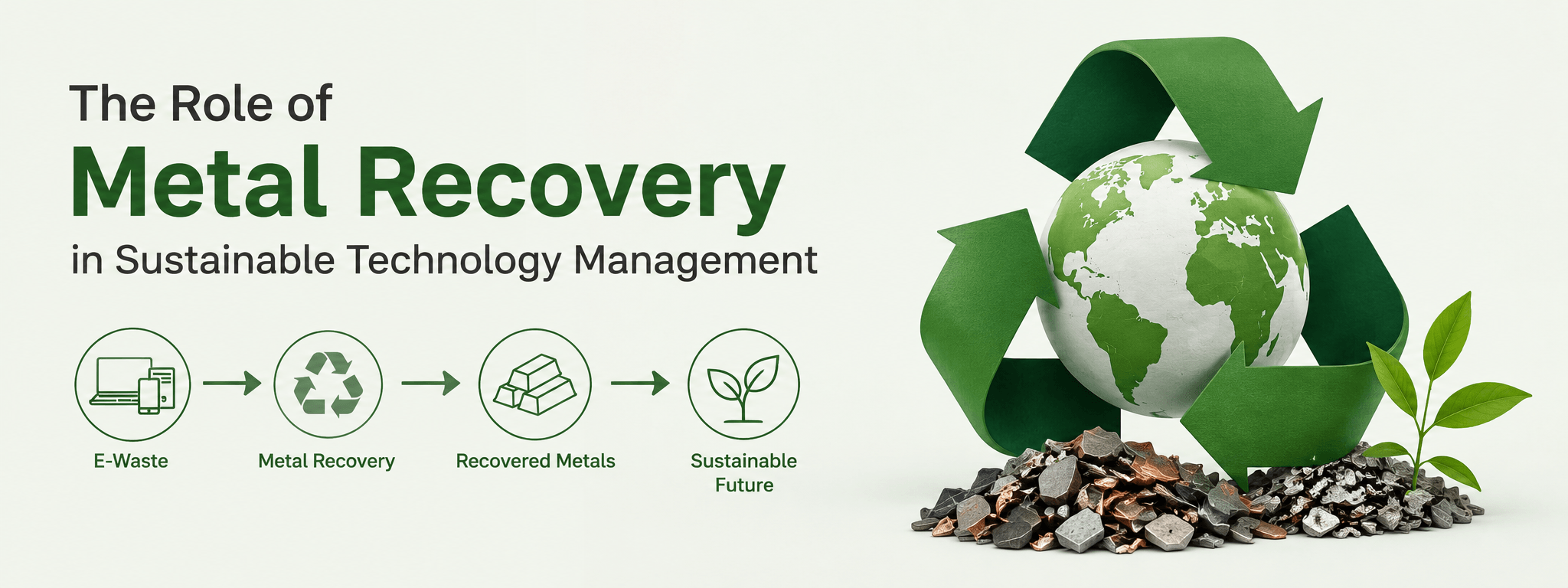
The Role of Metal Recovery in Sustainable Technology Management
Technology is evolving at an unprecedented pace, driving innovation across industries and transforming the way businesses operate. Organizations regularly upgrade computers, laptops, servers, networking equipment, storage devices, smartphones, and other electronic assets to improve efficiency, strengthen cybersecurity, and remain competitive. While these technological advancements deliver numerous business benefits, they also generate a growing volume of e-waste, creating significant environmental and resource management challenges.
Discarded electronic equipment contains more than obsolete components, it is a valuable source of recoverable metals such as gold, silver, copper, aluminum, palladium, platinum, and rare earth elements. These metals are essential for manufacturing new electronic products, renewable energy technologies, electric vehicles, telecommunications equipment, and industrial machinery. However, when electronic waste is improperly disposed of, these valuable resources are permanently lost, while hazardous substances may contaminate the environment.
Metal recovery has emerged as one of the most important pillars of sustainable technology management. By recovering valuable metals from end-of-life electronic equipment through responsible recycling and resource recovery processes, businesses can reduce environmental impact, conserve natural resources, support the circular economy, and maximize the value of retired IT assets.
In this blog, we explore the role of metal recovery in sustainable technology management, its environmental and economic benefits, and why organizations should integrate responsible metal recovery into their IT asset disposition and sustainability strategies.
Understanding Metal Recovery in Electronic Waste Recycling and Sustainable Technology Management
Metal recovery is the process of extracting valuable metals from discarded electronic equipment so they can be refined and reused in manufacturing new products. Modern electronic devices contain a wide variety of precious, ferrous, and non-ferrous metals that remain highly valuable even after the equipment reaches the end of its operational life.
Professional e-waste recycling and IT Asset Disposition (ITAD) companies use advanced dismantling, segregation, mechanical processing, and refining techniques to recover metals from computers, laptops, servers, hard drives, printed circuit boards, mobile devices, networking equipment, batteries, and other electronic assets. Instead of allowing these materials to become landfill waste, certified recycling facilities ensure that recoverable resources are reintroduced into industrial supply chains.
Metal recovery plays a critical role in sustainable technology management by extending the lifecycle of valuable raw materials, reducing dependence on mining, lowering manufacturing emissions, and promoting responsible resource utilization.
Why Valuable Metals in Electronic Waste Should Never Be Wasted
Many businesses view obsolete electronic equipment simply as waste. In reality, end-of-life IT assets represent an important source of secondary raw materials. Circuit boards, processors, connectors, cables, batteries, and electronic components contain valuable metals that retain significant economic value long after the equipment becomes technologically outdated.
Gold is commonly used in connectors and microprocessors because of its excellent conductivity and corrosion resistance. Silver supports electrical conductivity in numerous electronic components, while copper is extensively used in wiring, motors, transformers, and circuit boards. Aluminum provides lightweight structural support, and rare earth elements play an essential role in magnets, displays, and advanced electronic applications.
Recovering these materials through certified metal recovery services reduces pressure on natural resources while supporting sustainable manufacturing practices. Businesses that responsibly recycle obsolete IT equipment contribute to resource conservation while helping reduce the environmental impact associated with mining and raw material extraction.
Supporting the Circular Economy Through Responsible Metal Recovery Services
The circular economy focuses on keeping products, materials, and resources in use for as long as possible through reuse, refurbishment, remanufacturing, recycling, and material recovery. Metal recovery is one of the most effective ways to support this sustainable economic model because it transforms end-of-life electronics into valuable raw materials for future manufacturing.
Instead of extracting new metals from finite natural resources, manufacturers can utilize recycled metals recovered from electronic waste to produce new computers, smartphones, networking equipment, renewable energy systems, automotive components, and industrial machinery. This significantly reduces resource consumption while lowering energy requirements and greenhouse gas emissions associated with primary metal production.
For organizations pursuing Environmental, Social, and Governance (ESG) goals, integrating metal recovery into electronic waste management demonstrates a practical commitment to circular economy principles and sustainable business operations.
Reducing Environmental Impact Through Precious Metal Recovery from Electronic Waste
Mining and refining virgin metals require enormous amounts of energy, water, and land while generating significant greenhouse gas emissions and environmental disruption. Large-scale mining activities can contribute to deforestation, habitat destruction, soil degradation, and water pollution.
Professional metal recovery services help reduce these environmental impacts by recovering valuable materials already embedded in obsolete electronic equipment. Recycling metals from discarded IT assets consumes considerably less energy than extracting and refining raw materials from natural ore deposits.
In addition, responsible metal recovery prevents hazardous electronic waste from entering landfills, where toxic substances may contaminate surrounding ecosystems. Businesses that choose certified electronics recycling and precious metal recovery services actively reduce their environmental footprint while supporting cleaner manufacturing supply chains.
Protecting Data Security While Recovering Valuable Resources
Recovering valuable materials from electronic equipment should never compromise information security. Business laptops, desktops, servers, hard drives, solid-state drives, storage arrays, and mobile devices often contain confidential business information, financial records, customer databases, employee information, and intellectual property.
Professional IT Asset Disposition providers integrate certified data destruction into the metal recovery process before any recycling or material extraction begins. Secure data sanitization, degaussing, and physical media destruction ensure that sensitive information is permanently removed according to internationally accepted standards.
Combining certified data destruction with responsible metal recovery allows organizations to achieve both cybersecurity objectives and sustainability goals without compromising regulatory compliance or customer trust.
Why GreenTek Reman Is a Trusted Partner for Precious Metal Recovery and Sustainable Technology Management
Recovering valuable resources from obsolete technology requires advanced technical expertise, certified recycling processes, and a strong commitment to sustainability. GreenTek Reman has established itself as one of India’s trusted providers of IT Asset Disposition (ITAD), precious metal recovery, electronics recycling, reverse logistics, and circular economy solutions.
The company offers end-to-end services that include secure asset collection, certified data sanitization, refurbishment, IT asset remarketing, precious metal recovery, environmentally responsible recycling, reverse logistics, and regulatory documentation. Every stage of the process is designed to maximize resource recovery while protecting sensitive business information and ensuring compliance with environmental regulations.
GreenTek Reman operates according to internationally recognized standards, supported by certifications including R2v3, ISO 9001:2015, and ISO 14001:2015. With experienced technical professionals, advanced recycling capabilities, transparent reporting, and nationwide service coverage, the company helps organizations recover maximum value from retired IT assets while advancing their sustainability and ESG objectives.
Conclusion
As technology continues to evolve, businesses must adopt more sustainable approaches to managing obsolete electronic equipment. Metal recovery has become a critical component of responsible technology lifecycle management because it transforms discarded electronics into valuable resources while reducing environmental impact and supporting the circular economy.
Recovering precious metals from end-of-life IT assets conserves natural resources, reduces dependence on mining, lowers manufacturing emissions, protects the environment, and enables organizations to recover financial value from obsolete technology. When combined with certified data destruction, IT Asset Disposition, and environmentally responsible recycling, metal recovery becomes an essential strategy for modern businesses seeking operational efficiency and long-term sustainability.
By partnering with an experienced organization like GreenTek Reman, businesses can securely manage retired electronic equipment while maximizing resource recovery, strengthening regulatory compliance, supporting ESG initiatives, and contributing to a more sustainable technology ecosystem. As demand for electronic devices continues to grow, responsible metal recovery will play an increasingly important role in building a resilient, resource-efficient, and environmentally responsible future.