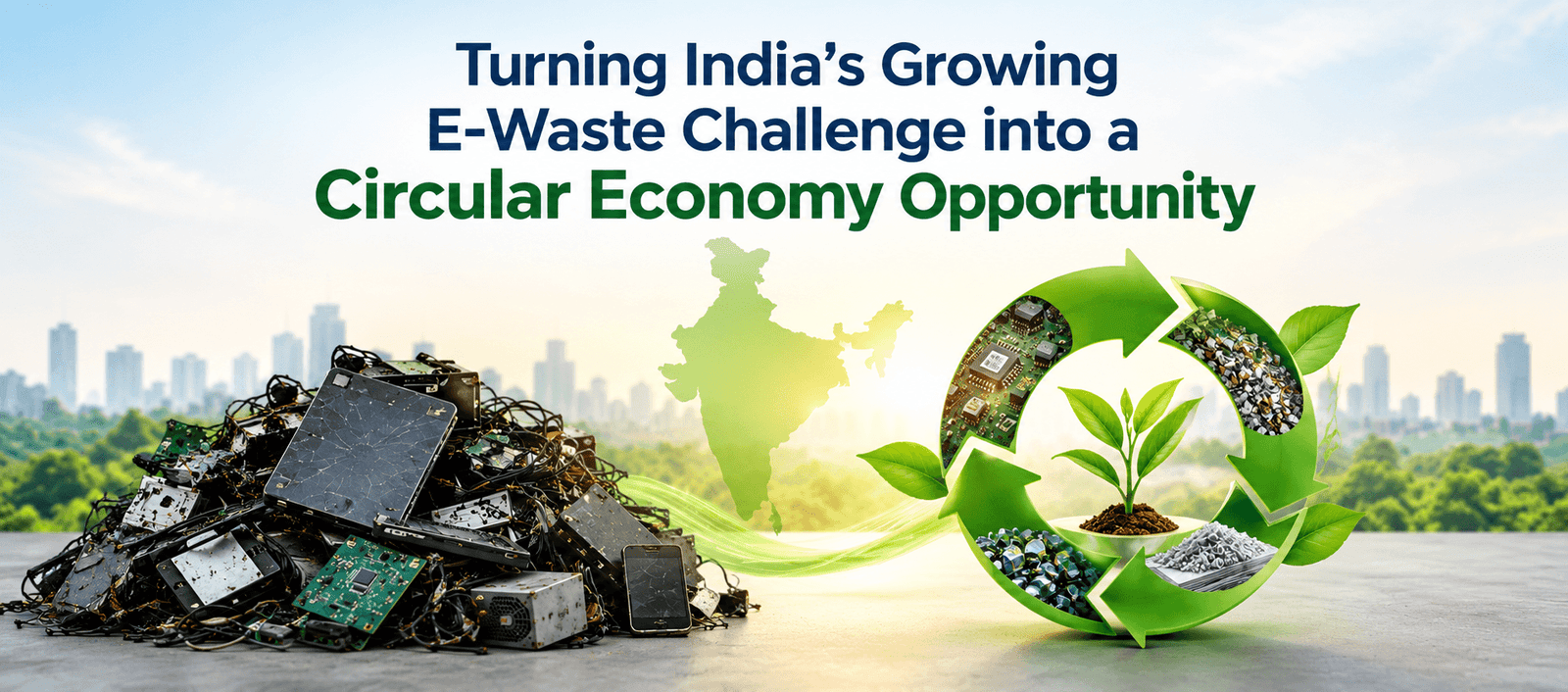
Turning India’s Growing E-Waste Challenge into a Circular Economy Opportunity
How GreenTek Reman Supports Businesses in Building a Secure, Compliant and Sustainable E-Waste Management Ecosystem
Industry Context
India is experiencing a rapid transformation in the way businesses, consumers and institutions use technology. Laptops, desktops, servers, smartphones, networking equipment, storage devices, printers, monitors and other electronic products have become essential to everyday operations. At the same time, shorter technology replacement cycles are creating a growing volume of obsolete and end-of-life electronic equipment.
A recent Business Standard report, citing an IMARC report, projects that India’s e-waste recycling market could grow from approximately Rs. 1.7 billion in 2025 to Rs. 3 billion by 2034, representing a compound annual growth rate of 6.34% between 2026 and 2034. The report identifies increasing electronic consumption, shorter product lifecycles, tighter regulations, investment in recycling infrastructure and growing sustainability awareness as important factors behind this expansion.
For businesses, this growth represents both a challenge and an opportunity. The opportunity is more significant. Old electronics should not automatically be treated as waste. Depending on their condition, assets can potentially be reused, refurbished, remarketed, recycled or processed for recovery of valuable materials. This is where professional IT Asset Disposition (ITAD) and e-waste management become critical.
GreenTek Reman addresses this requirement through an integrated approach that combines IT asset disposition, secure data sanitization, e-waste recycling, refurbishment, reverse logistics, product and equipment destruction, precious metal recovery and compliance support.
The Business Challenge: Rapid Technology Replacement Creates a Growing E-Waste Problem
Businesses regularly upgrade employee laptops, replace desktops, modernize servers, expand data centres, refresh networking infrastructure and retire storage systems. What was once considered long-term IT equipment can now become obsolete considerably faster because of changing performance requirements, cybersecurity considerations, software compatibility and evolving business needs.
The Business Standard report specifically identifies IT and telecommunications equipment as a major source of India’s e-waste, including computers, servers and mobile phones. It also highlights the growing relevance of retired data-centre equipment such as servers, GPUs, storage systems and networking hardware.
For an enterprise managing hundreds or thousands of devices, simply removing old equipment from an office or data centre does not solve the problem. Without a structured process, retired technology can remain stored for years, enter informal disposal channels or create unnecessary data-security and compliance risks.
The Core Problem: E-Waste Is Also a Data Security and Asset Management Issue
Electronic waste management is often viewed primarily through an environmental lens. However, corporate e-waste has another critical dimension: information security.
A retired laptop may contain business documents. A server may contain customer information. A hard drive may contain financial records. Storage equipment may contain confidential databases. Simply deleting files, formatting a drive or removing a device from an organization’s network does not necessarily provide sufficient assurance that sensitive information cannot be recovered.
The Business Standard report also highlights data security concerns associated with retired servers, hard drives and storage devices. It notes that certified recyclers can provide documented data wiping and destruction, creating a record of how retired equipment was handled. This makes secure data sanitization an essential component of modern IT asset disposition.
GreenTek Reman integrates data security into the ITAD lifecycle. Its ITAD services include secure data sanitization and destruction using processes such as degaussing, shredding, disintegration and secure overwriting, depending on the asset and requirement. The objective is to ensure that data security is addressed before equipment proceeds toward reuse, refurbishment, recycling or destruction.
The GreenTek Reman Approach: From Retired Technology to Responsible Resource Recovery
GreenTek Reman’s approach is based on a simple but powerful principle: Reduce, Reuse and Recycle. Instead of treating every retired electronic device as disposable waste, the company evaluates technology according to its remaining utility, condition, data-security requirements and material recovery potential.
The process can broadly involve asset collection, inventory and assessment, secure data sanitization, testing and evaluation, refurbishment or reuse where appropriate, recycling of end-of-life equipment, material recovery and responsible final processing.
GreenTek Reman operates a complete e-waste processing facility in Greater Noida, Uttar Pradesh, where electronic equipment can be processed for reuse, end-of-life disposition, de-manufacturing and recycling. The company states that its facility handles categories including computers, laptops, servers, networking equipment, printers, monitors, televisions and other electronic equipment.
This integrated model is particularly relevant as India’s formal e-waste recycling market expands.
Solution: Integrated IT Asset Disposition and E-Waste Recycling
GreenTek Reman’s ITAD model is designed to bring multiple end-of-life technology requirements under one structured program.
Step 1: Secure Collection and Reverse Logistics
The first stage is the controlled movement of retired technology from offices, warehouses, data centres or other business locations. For organizations operating across multiple locations, reverse logistics is particularly important because equipment may be distributed across cities and facilities.
A structured logistics process reduces the risks associated with uncontrolled transportation and provides greater visibility over the movement of corporate assets. This becomes increasingly relevant as businesses enter into bulk disposal contracts for large volumes of IT equipment, a trend highlighted in the Business Standard report.
Step 2: Asset Assessment and Segregation
Once assets reach the appropriate processing facility, equipment can be evaluated according to condition, functionality and end-of-life status. A device that is still functional should not necessarily be treated as scrap.
Where practical, equipment can be considered for reuse, refurbishment or recovery of usable components. Equipment that cannot reasonably be reused can instead proceed toward responsible recycling and material recovery.
This approach supports the circular economy by extending the useful life of technology wherever possible and recovering resources from equipment that has genuinely reached the end of its lifecycle.
Step 3: Secure Data Sanitization and Data Destruction
Data security remains one of the most important stages of corporate IT asset disposition. GreenTek Reman provides data sanitization services that can include secure overwriting, degaussing and physical destruction methods, depending on the type and condition of the storage media. Its services can be performed at the company’s facility or at client premises.
For businesses, this creates a critical separation between the physical asset and the information stored on it. Once the appropriate data destruction or sanitization process has been completed, the asset can move forward based on its remaining value and processing requirements.
Step 4: Reuse and Refurbishment
Not every retired IT asset is necessarily waste. A computer replaced because an organization is upgrading its infrastructure may still be functional. A server replaced because of capacity requirements may have reusable components.
A laptop retired from one business environment may potentially have a second useful lifecycle after appropriate testing and refurbishment. This is why ITAD is broader than conventional e-waste disposal.
By identifying equipment suitable for reuse or refurbishment, organizations can support resource efficiency and reduce the environmental impact associated with manufacturing replacement equipment.
Step 5: Responsible E-Waste Recycling
At GreenTek Reman’s Greater Noida processing facility, electronic equipment can be de-manufactured and processed to recover materials. The company describes its infrastructure as supporting recycling and resource recovery while following the principles of Reduce, Reuse and Recycle.
Responsible electronics recycling is important because electronic equipment contains a complex combination of materials. If discarded through uncontrolled channels, some components can contribute to environmental risks.
When processed through appropriate recycling systems, however, valuable materials can be recovered and returned to productive use.
Compliance and Traceability: Moving Away from Informal Disposal
India’s e-waste ecosystem continues to face a significant challenge from informal disposal. The Business Standard report notes that informal scrap networks remain important in India, particularly in smaller cities and semi-urban areas, while formal recycling infrastructure continues to expand.
For individual consumers, informal channels may appear convenient. For enterprises, however, the risks can be considerably greater. Businesses often need to demonstrate where their assets went, how data was handled, whether recycling was performed responsibly and whether documentation is available for internal or regulatory purposes.
GreenTek Reman provides documentation such as Certificates of Recycling, Data Destruction Certificates and Compliance Reports as part of its service offering. This creates a more transparent asset disposition trail and can help businesses maintain evidence of responsible electronic waste management.
R2v3 Certification and Responsible Electronics Recycling
GreenTek Reman is Asia-Pacific’s first R2v3-certified ITAD and e-waste management company. Its R2v3 certification covers areas including data sanitization, downstream recycling, testing and repair, metal recovery and certified e-waste processing.
For organizations selecting an e-waste recycling company in India, such credentials can provide an additional basis for evaluating the maturity of a provider’s processes. The objective should be to look beyond collection.
A responsible ITAD partner should provide visibility into what happens after collection, including data security, reuse, recycling, downstream processing and documentation.
Business Value Created Through Responsible ITAD
The benefits of a structured e-waste management program extend beyond environmental sustainability.
Improved Data Security
Secure data sanitization reduces the risk associated with disposing of storage devices containing confidential information.
Better Asset Visibility
A structured ITAD process provides organizations with greater visibility into retired equipment and its final disposition.
Potential Value Recovery
Assets suitable for reuse, refurbishment or remarketing may retain residual value, while end-of-life equipment can provide recoverable materials.
Reduced Environmental Impact
Responsible e-waste recycling helps divert electronic equipment from uncontrolled disposal and supports resource recovery.
Regulatory and Compliance Support
Documented recycling and disposal processes can help organizations demonstrate responsible management of electronic assets.
Stronger Sustainability Reporting
Corporate e-waste management can contribute to wider ESG, CSR and sustainability objectives by creating measurable processes around technology lifecycle management.
Circular Economy Participation
Reuse, refurbishment and material recovery help move businesses from a linear “purchase-use-dispose” model toward a more circular approach.
Why This Model Matters as India’s E-Waste Recycling Market Expands
The projected growth of India’s e-waste recycling market creates a larger role for organized recyclers, ITAD providers, businesses and technology stakeholders. The Business Standard report forecasts the market reaching Rs.3 billion by 2034 and identifies corporate sustainability, regulatory compliance, recycling infrastructure and shorter device lifecycles among the major growth drivers.
But market growth alone is not enough. India also needs stronger collection systems, greater formalization, responsible recycling capacity, secure data destruction and better resource recovery. For businesses, e-waste management needs to become part of the IT lifecycle rather than an activity that begins only after equipment is discarded.
GreenTek Reman: Building a More Responsible Future for India’s Electronics
GreenTek Reman provides end-to-end ITAD and e-waste management solutions designed to help organizations responsibly manage obsolete technology.
Its service portfolio includes IT Asset Disposition, data sanitization, precious metal recovery, solar panel recycling, product and equipment destruction and related e-waste management solutions. The company operates a complete e-waste processing facility in Greater Noida and serves organizations across India.
With its focus on Reduce, Reuse and Recycle, GreenTek Reman aims to move electronic equipment through the most responsible pathway available. As India’s e-waste recycling market continues to expand, the future will depend on organizations making better decisions about what happens to their technology after its first useful life.
Conclusion
India’s transition toward a larger formal e-waste recycling ecosystem represents an important opportunity for businesses to rethink how they manage obsolete technology.
The projected growth of the country’s e-waste recycling market demonstrates the increasing economic importance of responsible electronics recycling. At the same time, the continued presence of informal disposal channels, gaps in collection infrastructure and concerns around data security demonstrate why businesses require reliable and transparent end-of-life asset management.
GreenTek Reman’s integrated approach demonstrates how IT Asset Disposition can connect data security, sustainability, compliance and resource recovery. By securely collecting retired technology, sanitizing sensitive data, identifying reuse opportunities, recycling end-of-life equipment and recovering valuable materials, businesses can turn obsolete IT assets from an operational liability into part of a circular economy strategy.
And as India’s digital infrastructure continues to expand, responsible ITAD and e-waste recycling will become increasingly important to building a cleaner, safer and more circular economy.