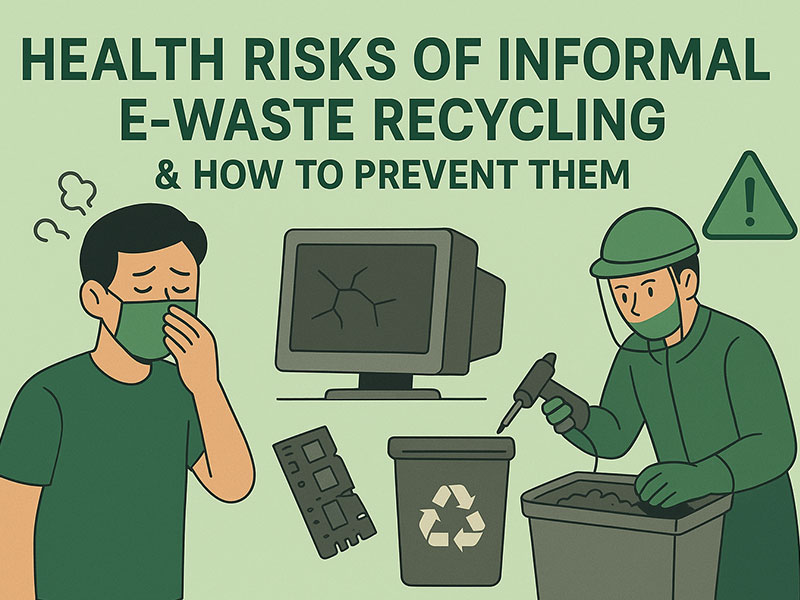
Health Risks of Informal E-waste Recycling & How to Prevent Them
While electronics bring immense convenience, their disposal (or lack thereof) has birthed a growing global concern: informal e-waste recycling. Millions of informal workers sort, strip, burn, and extract parts from discarded electronics in search of valuable metals. However, this unregulated hustle isn’t just environmentally damaging; it’s a health hazard of industrial proportions. Let’s break it down and understand how we can tackle the health risks of informal e-waste recycling.
What Is Informal E-waste Recycling?
First things first, informal e-waste recycling refers to the unregulated processing of discarded electronic devices by individuals or small groups, often in developing countries. These operations usually take place in makeshift workshops, open fields, or even residential backyards. Workers, often including children, manually dismantle electronics, burn wires to extract copper, use acid baths to recover gold, and dump non-valuable residues irresponsibly. While this method helps recover some value from what would otherwise be trash, the health and environmental costs are alarming.
What Are Major Health Risks Of Informal E-Waste Recycling
1. Respiratory Problems from Toxic Fumes
Imagine waking up every morning to a job that involves sifting through heaps of old electronics, burning cables, and smashing open computer parts, all without proper safety gear. For countless informal e-waste workers across developing countries, this is their daily reality. These workers, often including women and children, handle electronics by hand and use open fires to extract valuable materials like copper and gold from wires and circuit boards.
When wires are burned or old electronics are broken apart without proper ventilation or safety measures, they release a cocktail of toxic chemicals into the air. We’re talking about substances like lead, mercury, cadmium, and brominated flame retardants, which are hard on the lungs too. Regular exposure can lead to serious respiratory issues such as chronic bronchitis, asthma, and long-term damage to the lungs, kidneys, and nervous system. Even worse, studies have linked prolonged inhalation of these substances to cancer and developmental disorders in children.
2. Heavy Metal Poisoning
Electronic waste isn’t just made up of wires and plastic but also has heavy metals like lead, mercury, cadmium, and arsenic. When electronic devices are dismantled or burned in unsafe environments, these harmful substances are released into the air, soil, and even water. Workers in informal e-waste recycling zones often don’t have access to protective gear or proper tools, meaning their skin, lungs, and hands are in direct contact with these toxic materials. Over time, this exposure can lead to heavy metal poisoning, which silently harms the nervous system, kidneys, and even bones, making daily life a painful struggle.
The situation is even more alarming when it comes to children. In many e-waste hubs, kids help with sorting or even breaking down electronics, unknowingly putting their future at risk. Their growing bodies absorb toxins faster and suffer more from them. Exposure to lead and mercury, for example, has been directly linked to developmental delays, behavioral problems, and learning disabilities.
3. Skin Disorders and Burns
In many informal e-waste recycling hubs, workers handle discarded electronics with bare hands, without so much as a pair of gloves or a face mask. They crack open old batteries, pry apart CRT monitors, and extract metals from wires soaked in chemicals.
Over time, constant contact with corrosive substances like battery acid, lead-laced dust, and toxic glues causes more than just stinging fingers. It leads to chronic skin rashes, chemical burns, and long-term dermatological disorders that don’t just fade away with an ointment. These issues are often ignored until they become severe, mainly because most informal workers don’t have access to basic healthcare.
4. Reproductive Health Risks
Substances like phthalates (often used as plasticizers) and PCBs (polychlorinated biphenyls, once common in electronic components) are known to linger in the body long after exposure. For informal e-waste recycling workers, prolonged contact with these chemicals doesn’t just lead to short-term sickness; it can disrupt the body’s endocrine system, which controls hormones. This disruption has been tied to a rise in infertility, birth defects, and serious hormonal imbalances in both men and women working in these unsafe conditions.
The risks are even more severe for female workers, especially those who are pregnant or planning to be. Studies and medical reports have linked chemical exposure from unsafe e-waste handling to miscarriages, premature births, and even complications during pregnancy that can endanger both the mother and child.
5. Mental Health and Neurological Impact
For workers in informal e-waste recycling, handling electronics without safety measures means inhaling or absorbing small amounts of hazardous metals daily. Then gradually, many adults begin to experience memory problems, difficulty concentrating, and even mood swings or depression, i.e., the slow erosion of brain function caused by long-term neurotoxic exposure. Even low levels of lead or mercury can cause permanent neurological damage, resulting in learning disabilities, behavioral issues, and developmental delays in children working in this sector.
6. Community-wide Health Impact
When toxic chemicals like lead, mercury, cadmium, and brominated flame retardants are released into the open air or dumped into nearby land and water bodies, they don’t simply vanish. These toxins leach into the soil and contaminate groundwater, the same water used for drinking, cooking, and farming. Over time, the poisons make their way into the local food chain, entering vegetables, livestock, and eventually, people’s dinner plates.
Entire communities living near these informal e-waste hubs begin to feel the impact. We’re talking about higher rates of respiratory diseases, unexplained skin conditions, and even birth defects among newborns. Multiple studies have drawn connections between proximity to informal recycling zones and elevated cancer risks or congenital anomalies.
The GreenTek Reman Way: A Safer, Smarter Solution
At GreenTek Reman, we don’t just talk about responsible e-waste management, we live it. As one of India’s leading IT asset disposition (ITAD) companies, GreenTek Reman provides scientific, secure, and sustainable e-waste recycling solutions that eliminate the health risks posed by informal methods.
Here’s how we do it differently:
Zero Landfill Approach
At GreenTek Reman, we take sustainability seriously. Our zero landfill policy ensures that over 95% of e-waste materials we collect are either recovered, refurbished, or recycled. That means fewer gadgets rotting away in landfills and more resources being returned to the economy. By doing this, we drastically reduce the carbon footprint of discarded electronics and keep harmful toxins like lead, cadmium, and mercury out of soil and water systems.
ISO-Certified Processes
At GreenTek Reman, our ISO-certified operations meet and often exceed international safety and compliance standards. Our facilities are designed to be hygienic, secure, and environmentally sound, with every stage of e-waste handling strictly monitored. From intake to final recovery, we follow best practices that ensure your electronics are processed in a way that’s legally compliant and ethically aligned. Certification also means we’re regularly audited, keeping us transparent and accountable. Whether you’re a corporate client or a sustainability-conscious individual, you can trust that every asset handed to us is managed with professional precision and green integrity.
Worker-First Ethics
Unlike informal e-waste recycling setups where workers are often seen burning wires without gloves, our teams operate in fully PPE-equipped environments. From gloves and respirators to eye protection and anti-static gear, every staff member is given the right tools to do their job safely and efficiently. Our worker-first model ensures that safety isn’t optional, it’s essential. And it shows in our low incident rate and high staff satisfaction.
Data Security & Transparency: Your Trust, Locked In
Every asset we handle, whether it’s a personal computer or a corporate server, is tagged, tracked, and documented throughout the disposal process. From secure data wiping to final reporting, you’ll know exactly where your device is, what stage it’s in, and when it’s been responsibly decommissioned. That’s transparency at work. Whether you’re worried about compliance with privacy laws or just protecting sensitive information, our systems are built to give you peace of mind.
CSR-Driven Partnerships
Whether you’re a tech giant with thousands of devices or a startup with a dozen, we offer compliant, audit-friendly recycling solutions that align with your CSR sustainability commitments. From impact reports and certificates to customized sustainability dashboards, we provide the tools you need to showcase your green contributions.
Conclusion
Informal e-waste recycling is a ticking time bomb for health and the environment. But it doesn’t have to be this way. With better policies, smarter consumer habits, and committed organizations like GreenTek Reman leading the charge, we can rewrite the narrative.