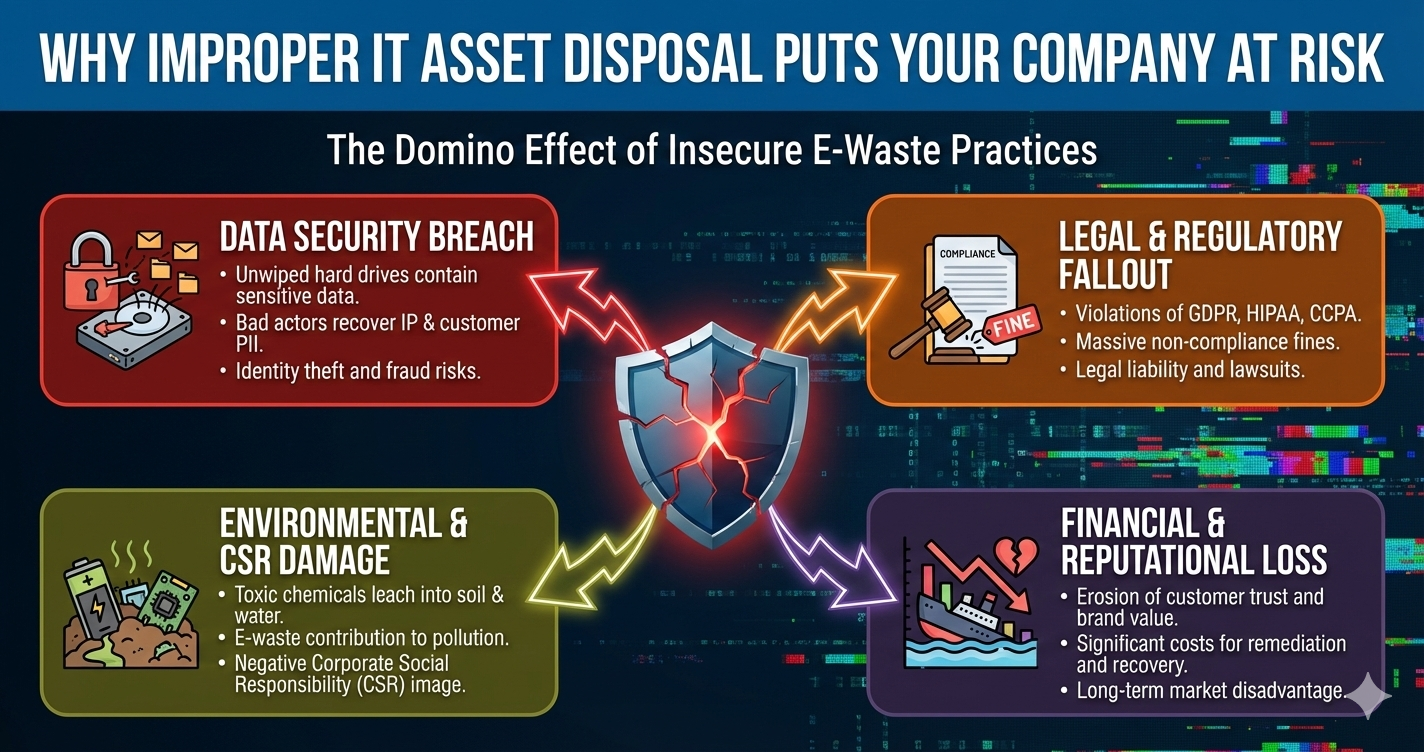
Why Improper IT Asset Disposal Puts Your Company at Risk
Improper handling of retired laptops, desktops, servers, storage devices, and networking equipment can expose companies to serious risks. These risks extend beyond data breaches and include legal penalties, financial losses, reputational damage, and environmental non-compliance. This is why structured and compliant IT asset disposal has become a business necessity rather than an operational afterthought.
This blog explores how improper disposal practices put organizations at risk, why responsible ITAD matters, and how businesses can protect themselves through secure, compliant, and sustainable approaches.
Understanding IT Asset Disposal in the Modern Enterprise
IT asset disposal refers to the process of securely managing end-of-life technology assets once they are no longer needed for business operations. This includes data-bearing devices such as hard drives and servers, as well as peripherals and electronic components.
In the past, disposal often meant resale, storage, or simple scrapping. Today, with stricter data protection regulations and growing environmental responsibilities, disposal must follow defined processes that ensure data security, regulatory compliance, and responsible recycling.
One of the most significant risks of improper IT asset disposal is data exposure. Many organizations assume that deleting files or formatting drives is sufficient to remove sensitive information. In reality, data can often be recovered using basic tools if proper data destruction methods are not applied.
Retired devices may still contain confidential customer records, employee data, financial information, intellectual property, or access credentials. If these assets are resold, discarded, or stolen without secure data erasure, the information they contain can fall into the wrong hands.
Data breaches caused by improperly disposed devices are particularly damaging because they are preventable. A single incident can lead to regulatory scrutiny, legal action, and long-term loss of trust.
Regulatory and Legal Consequences of Improper Disposal
Data protection laws and environmental regulations have become increasingly strict across regions. Organizations are legally responsible for safeguarding data throughout the entire lifecycle of their IT assets, including disposal.
Failure to follow compliant ITAD practices can result in penalties under data protection regulations, contractual breaches, and industry-specific compliance violations. Even if a third party mishandles disposed equipment, the original asset owner may still be held accountable.
Improper disposal can also violate e-waste management laws, leading to fines and legal complications. These regulatory risks make it essential for businesses to adopt documented, auditable, and compliant disposal processes.
Financial Risks
The financial impact of improper IT asset disposal goes far beyond regulatory penalties. Data breaches resulting from mishandled assets can lead to incident response costs, legal fees, customer compensation, and increased insurance premiums.
Additionally, organizations may lose the opportunity to recover residual value from retired assets. When equipment is discarded without assessment or refurbishment, businesses miss out on potential returns that could offset technology investments.
By contrast, structured ITAD programs help reduce losses while turning disposal into a controlled and value-driven process.
Reputational Damage and Loss of Customer Trust
Reputation is one of the most fragile assets a company holds. News of a data breach caused by discarded IT equipment can spread quickly, damaging brand credibility and customer confidence.
Clients and partners expect organizations to handle data responsibly, even when systems are no longer in use. Failure to do so raises questions about overall governance, risk management, and ethical practices.
Once trust is compromised, rebuilding it requires time, transparency, and significant effort. Proper IT asset disposal plays a quiet but crucial role in protecting a company’s public image.
Environmental Impact of Negligent IT Disposal
Improper disposal not only affects data security but also has serious environmental consequences. Electronic waste contains hazardous materials that can harm ecosystems if not processed correctly.
Dumping or exporting e-waste irresponsibly contributes to pollution, health risks, and regulatory violations. As sustainability becomes a priority for businesses and stakeholders alike, environmental negligence can negatively affect corporate responsibility goals.
Responsible ITAD practices ensure that equipment is recycled, refurbished, or disposed of in accordance with environmental standards, reducing landfill impact and promoting circular economy principles.
Common Mistakes Organizations Make With IT Asset Disposal
Many companies unintentionally put themselves at risk through poor disposal practices. Common mistakes include storing obsolete equipment indefinitely, relying on informal resale channels, or delegating disposal to unverified vendors.
Another frequent issue is the lack of proper documentation. Without certificates of data destruction or recycling records, organizations cannot prove compliance if audited.
These gaps often arise because ITAD is treated as a one-time task rather than an ongoing process integrated into IT lifecycle management.
Why Secure ITAD Requires a Structured Approach
Effective IT asset disposal is not just about removing equipment from the premises. It requires a structured approach that includes asset tracking, secure data destruction, compliance verification, and responsible recycling.
A well-defined ITAD program ensures that every asset is accounted for, every data-bearing device is sanitized or destroyed according to standards, and every step is documented. This structured approach reduces risk, improves accountability, and aligns disposal activities with broader business objectives.
The Role of Certified ITAD Partners
Partnering with a certified and experienced ITAD provider significantly reduces the risks associated with disposal. Such partners follow industry-recognized processes for data erasure, physical destruction, refurbishment, and recycling.
Certified providers also offer audit-ready documentation, including asset reports and certificates of data destruction. This transparency helps organizations demonstrate compliance and maintain governance standards.
Choosing the right partner is a critical decision that directly impacts data security, compliance, and sustainability outcomes.
How Improper ITAD Affects Long-Term Business Strategy
Improper disposal practices often reflect deeper issues in IT governance. When end-of-life management is neglected, it signals a lack of visibility into asset lifecycles and risk exposure.
Over time, this can affect strategic planning, budgeting, and sustainability initiatives. Organizations that integrate ITAD into their long-term IT strategy are better positioned to manage growth, transformation, and regulatory changes.
Responsible disposal supports resilience by ensuring that technology transitions do not introduce hidden vulnerabilities.
Connecting Responsible ITAD With Sustainability Goals
Sustainability is no longer optional for modern enterprises. Responsible IT asset disposal directly supports environmental, social, and governance objectives by reducing waste and extending the usable life of technology.
Refurbishment and remarketing of retired assets help conserve resources while enabling affordable access to technology. Recycling ensures that materials are recovered safely and responsibly. Organizations that prioritize sustainable ITAD demonstrate commitment to ethical operations and long-term value creation.
Greentek Reman: Building Trust Through Responsible IT Asset Disposal
Greentek Reman plays a vital role in helping organizations mitigate the risks associated with improper IT asset disposal. With a strong focus on secure data handling, compliance, and sustainability, the company supports businesses throughout the end-of-life stage of their IT assets.
Greentek Reman’s approach emphasizes structured processes, ensuring that every asset is tracked, data is securely erased or destroyed, and equipment is either refurbished for reuse or recycled responsibly. This not only reduces data security risks but also helps organizations recover value from retired assets.
A key strength of Greentek Reman lies in its commitment to circular economy principles. By prioritizing refurbishment and responsible remarketing wherever possible, the company helps extend the lifecycle of IT equipment while minimizing environmental impact.
Through transparent reporting and compliance-driven operations, Greentek Reman enables organizations to meet regulatory requirements with confidence. This alignment of security, sustainability, and value recovery makes Greentek Reman a trusted partner for businesses seeking reliable ITAD solutions without compromise.
Conclusion
Improper IT asset disposal is a silent but serious risk that can undermine data security, regulatory compliance, financial stability, and brand reputation. In a world where data breaches and environmental responsibility are under constant scrutiny, organizations cannot afford to overlook how they handle retired IT equipment.
A structured and responsible ITAD strategy protects sensitive information, reduces legal and financial exposure, and supports sustainability goals. By integrating disposal into the broader IT lifecycle and working with experienced partners, businesses can transform a potential risk into a controlled and value-driven process.
Companies that take IT asset disposal seriously are better equipped to protect their stakeholders, their data, and their future. As technology continues to evolve, responsible ITAD will remain a critical pillar of secure, compliant, and sustainable business operations.