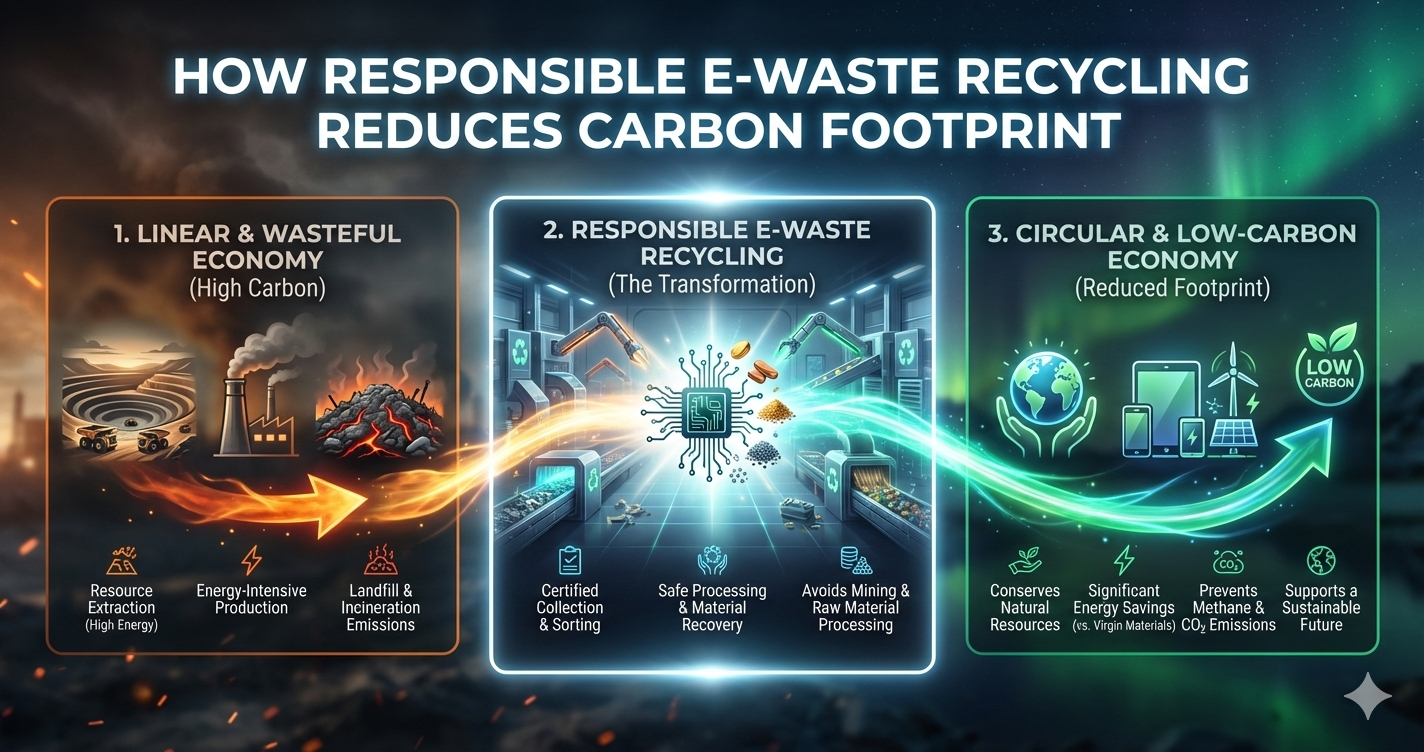
How Responsible E-Waste Recycling Reduces Carbon Footprint
As digital transformation accelerates across industries, electronic devices have become indispensable to modern life. From smartphones and laptops to servers and industrial IT equipment, technology enables efficiency, connectivity, and innovation. However, the rapid pace of technological advancement also brings a growing environmental challenge: electronic waste.
Discarded electronics contain valuable materials, hazardous substances, and embedded carbon emissions accumulated throughout their lifecycle. When managed irresponsibly, they contribute significantly to greenhouse gas emissions and environmental degradation. Responsible e-waste recycling has emerged as one of the most effective ways to reduce carbon footprint while supporting sustainable economic growth.
Understanding the Carbon Footprint of Electronic Devices
Every electronic device carries a carbon footprint that begins long before it reaches the user. Raw material extraction, component manufacturing, assembly, packaging, and global transportation all consume energy and generate emissions. The majority of a device’s lifetime carbon impact occurs during production rather than usage.
When electronics are prematurely discarded, the carbon emissions invested in their creation are effectively wasted. Manufacturing replacement devices further compounds emissions. Responsible recycling addresses this inefficiency by extending material use and reducing demand for energy-intensive production processes.
What Makes E-Waste a Growing Environmental Concern
Global e-waste volumes are increasing at an alarming rate due to shorter device lifecycles, frequent upgrades, and rising digital adoption. Improper disposal often leads to landfilling or informal recycling, both of which release harmful pollutants into the air, soil, and water.
Beyond local environmental damage, unmanaged electronic waste contributes indirectly to climate change. Toxic substances disrupt ecosystems, while uncontrolled burning and dismantling release greenhouse gases and particulate matter. Addressing this challenge requires structured and compliant recycling practices.
The Role of Responsible E-Waste Recycling
Responsible e-waste recycling goes beyond basic disposal. It involves systematic collection, safe dismantling, material recovery, and environmentally compliant processing of electronic equipment. Certified recycling processes ensure that reusable components are recovered and hazardous materials are handled without releasing toxins.
By recovering metals such as copper, aluminum, and precious elements, recycling reduces the need for mining and refining, both of which are highly carbon-intensive. This directly lowers emissions associated with raw material extraction and processing.
The benefits of responsible recycling extend far beyond immediate waste reduction. Over time, consistent recycling practices contribute to lower emissions, reduced resource depletion, and a more sustainable technology ecosystem.
Organizations that prioritize responsible recycling today help shape a future where innovation and environmental responsibility coexist.
Reducing Emissions Through Material Recovery
One of the most significant ways recycling reduces carbon footprint is through material recovery. Extracting metals from discarded electronics requires far less energy than producing them from virgin ores.
For example, recycling aluminum saves up to 95% of the energy required for primary production. Similar energy savings apply to copper, steel, and rare metals commonly found in electronic devices. These energy reductions translate into substantial carbon emission savings at scale.
Extending Product Lifecycles to Cut Carbon Impact
Responsible recycling also supports refurbishment and reuse. Devices that are repaired, upgraded, or repurposed avoid the emissions associated with manufacturing new equipment.
Extending the usable life of electronics reduces demand for new production, which in turn lowers overall carbon output. This approach aligns with circular economy principles, where resources are kept in use for as long as possible to maximize value and minimize environmental impact.
Minimizing Landfill Emissions and Environmental Damage
When electronics end up in landfills, they not only waste valuable resources but also contribute to long-term environmental harm. Decomposing components release greenhouse gases, while toxic substances contaminate surrounding ecosystems.
Proper recycling prevents these emissions by diverting waste away from landfills. Controlled processing ensures that harmful materials are neutralized and recyclable components are reintegrated into supply chains, reducing the environmental burden.
Supporting Energy-Efficient Manufacturing Cycles
By supplying recycled raw materials back into manufacturing, responsible recycling supports more energy-efficient production cycles. Manufacturers using recycled inputs require less energy, generate fewer emissions, and reduce reliance on environmentally damaging extraction practices.
This closed-loop approach creates a measurable reduction in carbon footprint across the entire electronics value chain.
The Connection Between E-Waste Recycling and Climate Goals
Governments and organizations worldwide are setting ambitious climate targets to reduce greenhouse gas emissions. Responsible e-waste recycling plays a critical role in achieving these goals by addressing emissions at the material and production level.
By integrating recycling into sustainability strategies, organizations can reduce Scope 3 emissions related to supply chains and end-of-life disposal, strengthening overall climate performance.
Corporate Responsibility and Carbon Reduction
Businesses are increasingly accountable for the environmental impact of their operations, including IT asset disposal. Choosing compliant recycling partners helps organizations meet environmental, social, and governance commitments.
Responsible recycling demonstrates environmental stewardship, reduces regulatory risk, and contributes to measurable carbon reduction outcomes. It also supports transparent reporting and sustainability audits.
Preventing Informal Recycling and Its Carbon Costs
Informal recycling practices often involve unsafe dismantling, open burning, and chemical extraction methods. These activities release toxic fumes and greenhouse gases while endangering human health.
Responsible recycling channels e-waste into regulated facilities that use environmentally sound processes. This not only protects workers and communities but also prevents unnecessary emissions caused by inefficient and harmful practices.
Creating a Circular Economy for Electronics
A circular economy aims to decouple growth from resource consumption. Responsible recycling is a cornerstone of this model, enabling materials to circulate back into production instead of being discarded.
By closing the loop, recycling reduces the carbon footprint of electronics while supporting economic resilience and resource security. This shift is essential for long-term sustainability in a technology-driven world.
How Responsible Recycling Benefits Communities
Beyond environmental gains, responsible recycling creates positive social impact. Formal recycling operations generate skilled jobs, improve workplace safety, and promote environmental awareness.
Cleaner air, reduced pollution, and better waste management contribute to healthier communities, reinforcing the broader benefits of reduced carbon emissions.
Modern recycling operations increasingly use technology to track materials, measure environmental impact, and ensure compliance. Data-driven processes allow organizations to quantify carbon savings achieved through recycling initiatives.
This transparency strengthens accountability and enables continuous improvement in sustainability performance.
Greentek Reman’s Role in Responsible E-Waste Management
The environmental benefits of recycling depend heavily on how processes are managed and monitored. Partnering with experienced, compliant recyclers ensures that carbon reduction goals are genuinely achieved.
Certified recyclers follow strict environmental and safety standards, maximizing material recovery while minimizing emissions and environmental harm.
Greentek Reman plays a vital role in advancing responsible e-waste recycling through structured, compliant, and environmentally focused processes. With expertise across IT asset disposition, recycling, and material recovery, the company supports organizations in reducing their environmental footprint without compromising data security or regulatory compliance.
Greentek Reman’s approach emphasizes maximum resource recovery, safe handling of hazardous components, and adherence to environmental standards. By integrating recycling with reuse and refurbishment wherever possible, the company helps extend product lifecycles and reduce demand for new manufacturing.
This focus on sustainability, compliance, and operational transparency positions Greentek Reman as a trusted partner for organizations seeking measurable carbon reduction and responsible technology lifecycle management.
Conclusion
Responsible e-waste recycling is a powerful tool in the fight against climate change. By conserving resources, reducing energy consumption, and preventing environmental pollution, it directly lowers carbon footprint across the electronics lifecycle.
As technology adoption continues to grow, the importance of responsible recycling will only increase. Businesses, institutions, and individuals all have a role to play by choosing compliant recycling solutions and supporting circular economy principles.
By treating electronic waste not as a burden but as a resource, we move closer to a future where technological progress supports, rather than undermines, environmental sustainability.