What India Can Learn from Nigeria’s E-Waste Challenge Before It’s Too Late
A recent report published by The Guardian Nigeria highlighted a concerning reality: when electronic waste is managed primarily through informal channels, countries risk losing not only valuable resources but also significant economic opportunities.
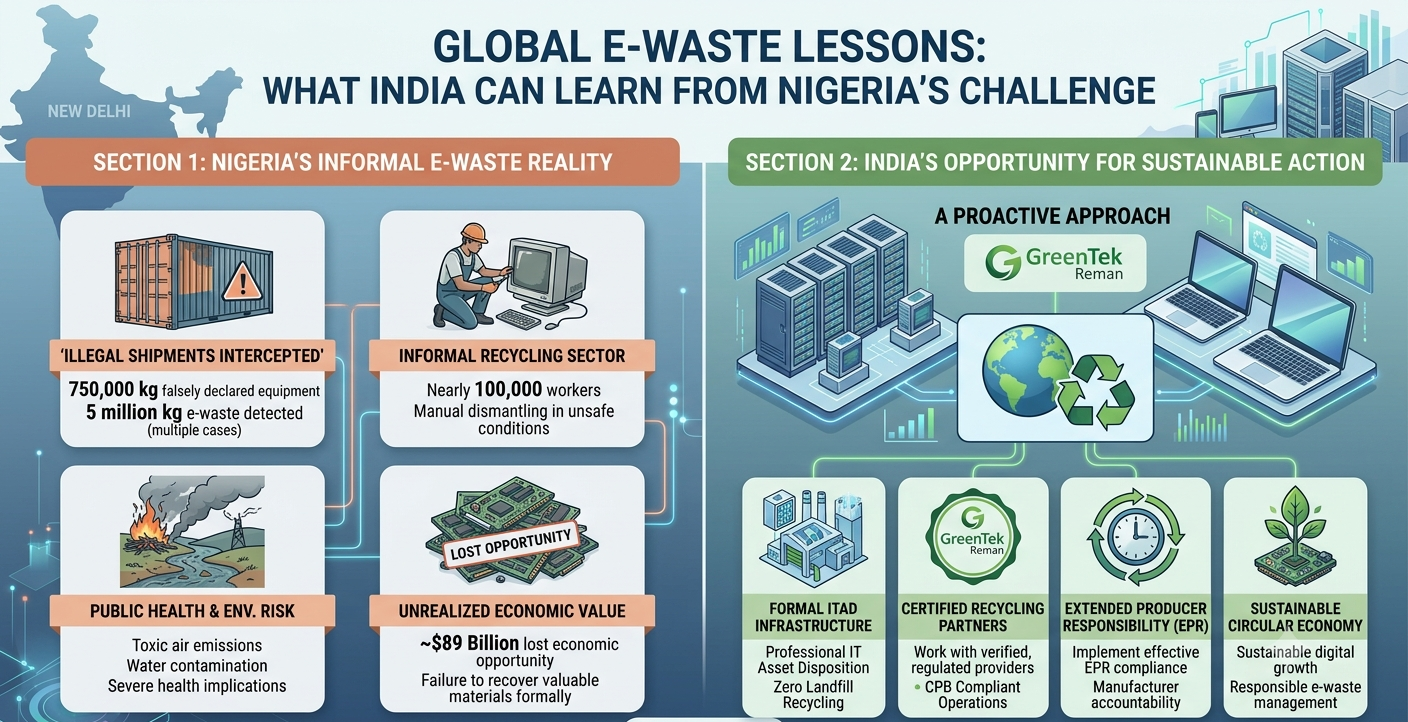
The scale of the challenge becomes even more striking when we look at the numbers. As highlighted, authorities have intercepted major illegal shipments of electronic waste over the years, including more than 5 million kilograms of e-waste destined for several West African countries in one case, while another operation uncovered 750,000 kilograms of waste falsely declared as functional electronic equipment.
The report also notes that nearly 100,000 people work in Nigeria’s informal e-waste recycling sector, often dismantling discarded electronics manually under unsafe conditions. Beyond the environmental and health implications, the publication estimates that inadequate formal recycling systems are preventing the country from unlocking an economic opportunity worth approximately $89 billion through the recovery of valuable materials from discarded electronics.
The blog explains how inadequate formal recycling infrastructure can result in environmental damage, public health concerns, and billions in unrealized value from recoverable materials.
At GreenTek Reman, we believe this is more than a story about one nation, it is a reminder for every rapidly digitizing economy, including India. India is witnessing unprecedented growth in technology adoption. Every year, millions of laptops, desktops, servers, smartphones, networking devices, and other electronic products reach the end of their lifecycle. While this digital transformation fuels economic growth, it also brings a responsibility that cannot be ignored: managing electronic waste sustainably.
The real question is not whether India will generate more e-waste. It certainly will. The question is whether we are prepared to manage it responsibly.
Improper disposal of electronic equipment does more than pollute land and water. It allows valuable materials such as copper, aluminium, gold, silver, and rare earth elements to be lost forever. More importantly, informal recycling practices often expose workers and surrounding communities to hazardous substances that can have long-term environmental and health consequences.
India has made meaningful progress by strengthening its E-Waste Management Rules, implementing Extended Producer Responsibility (EPR), and expanding the network of authorized recyclers. However, the recent report by The Guardian Nigeria reminds us that regulations are only effective when they are consistently enforced and supported by a well-functioning collection and recycling ecosystem.
The report highlights how used and near-end-of-life electronic equipment can continue to enter a country through weak enforcement and informal trade, eventually adding to the growing e-waste burden instead of extending product life responsibly.
This serves as an important lesson for India. As one of the world’s fastest-growing digital economies, we cannot afford to let informal recycling become the dominant channel for end-of-life electronics. Scientific recycling should not compete with unsafe practices, it should become the preferred choice for businesses, institutions, and consumers alike.
Every stakeholder has a role to play. Manufacturers must build stronger take-back and collection mechanisms. Businesses should retire their IT assets through authorized IT Asset Disposition (ITAD) and e-waste recycling partners instead of unverified scrap channels. Policymakers and enforcement agencies must continue strengthening compliance while creating greater awareness about the environmental and economic value of responsible e-waste management.
The Guardian’s report also points to another critical reality: electronic waste is not merely waste. It contains valuable materials that can be recovered and reintroduced into the manufacturing cycle.
When discarded irresponsibly, these resources are lost, while hazardous substances are released into the environment and workers in the informal sector remain exposed to unsafe dismantling practices. What could have become part of a circular economy instead becomes an environmental and public health challenge.
At GreenTek Reman, we believe that the end of an electronic device’s lifecycle should mark the beginning of resource recovery, not environmental degradation. Through certified IT Asset Disposition (ITAD), secure data destruction, responsible e-waste recycling, and material recovery, organizations can protect confidential data, remain compliant with environmental regulations, and contribute to a more sustainable circular economy.
The lesson from Nigeria is not one of comparison; it is one of foresight. The countries that invest today in formal recycling infrastructure, responsible reverse logistics, and authorized recycling ecosystems will be the ones that recover critical resources, create skilled green jobs, and build resilient circular economies for the future.
India has an opportunity to lead by example. As technology adoption accelerates across industries, our approach to managing end-of-life electronics must evolve just as quickly. The future of digital transformation should not be measured only by the devices we deploy, but also by how responsibly we recover, recycle, and reintroduce their valuable resources back into the economy.
Source acknowledged: This article is inspired by reporting published by The Guardian Nigeria on the challenges and economic implications of informal e-waste management in Nigeria. The reflections shared above represent GreenTek Reman’s perspective on what India can learn from global e-waste management challenges.