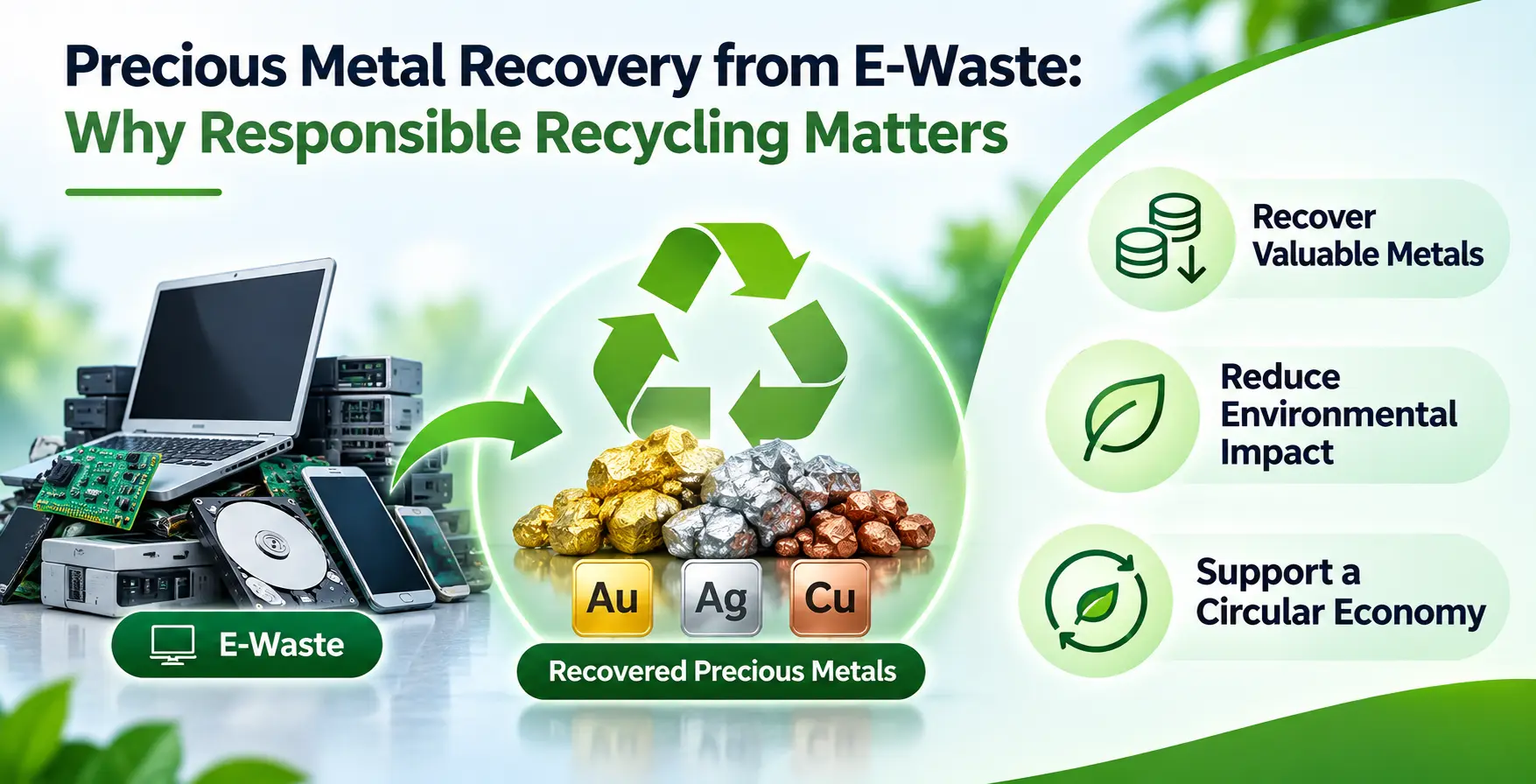
Precious Metal Recovery from E-Waste: Why Responsible Recycling Matters
While discarded electronic devices are often considered useless, they contain valuable materials that can be recovered and reintroduced into the manufacturing supply chain. Printed circuit boards, connectors, processors, and other electronic components may contain precious metals such as gold, silver, palladium, and platinum. Recovering these resources through responsible recycling helps reduce dependence on virgin mining, conserve natural resources, and minimise the environmental impact of electronic waste.
Precious metal recovery from e-waste is therefore much more than a recycling activity. It is an important part of building a circular economy in which valuable materials are recovered, processed, and reused instead of being unnecessarily discarded.
However, extracting these metals requires specialised processes, appropriate infrastructure, trained professionals, and strict environmental controls. Improper recycling methods can release hazardous substances, contaminate the environment, and create serious occupational health risks.
This makes responsible e-waste management essential for businesses, manufacturers, electronic equipment producers, and organisations generating large quantities of obsolete electronic assets.
In this blog, we explore how precious metal recovery from e-waste works, why responsible recycling matters, the environmental and economic benefits of metal recovery, and how professional recycling organisations such as GreenTek Reman contribute to sustainable resource management.
What Is Precious Metal Recovery from E-Waste and Why Is Electronic Recycling Important?
Precious metal recovery from e-waste refers to the process of extracting valuable metals from discarded electrical and electronic equipment through specialised recycling and material recovery techniques.
Electronic devices contain different materials, including plastics, glass, ferrous metals, non-ferrous metals, and precious metals. Their composition varies according to the equipment type, manufacturer, model, and manufacturing technology.
For example, printed circuit boards found in computers, smartphones, servers, and networking devices may contain small quantities of valuable metals used in electrical connections and electronic components.
When these devices reach the end of their useful life, their recoverable materials can become valuable secondary resources. Instead of allowing obsolete electronics to enter landfills or informal recycling channels, responsible recycling ensures that suitable materials are recovered through controlled processes.
This approach offers two important advantages. First, it reduces the environmental risks associated with improper electronic waste disposal. Second, it allows valuable resources to return to the manufacturing ecosystem, supporting resource efficiency and sustainable production.
Precious metal recovery also complements the broader principles of responsible e-waste management, which prioritise reducing waste generation, extending product life through reuse, and recycling materials that cannot be reused.
Which Precious Metals Can Be Recovered from Electronic Waste and Old Electronics?
Electronic waste contains several economically valuable materials. Although the quantity of each metal varies depending on the equipment, certain electronic components are particularly relevant to precious metal recovery.
Gold Recovery from Printed Circuit Boards and Electronic Components
Gold is widely used in electronics because of its excellent electrical conductivity, corrosion resistance, and reliability in electrical connections. It can be found in selected connectors, contact points, processor-related components, and printed circuit boards.
Gold is particularly useful in applications where stable electrical connections are important over extended periods. Recovering gold from electronic waste helps conserve a valuable natural resource and reduces the need for additional primary extraction.
However, the recovery process requires specialised equipment and controlled processing because gold is generally present in relatively small quantities within complex electronic assemblies.
Silver Recovery from Electronic Waste and Electrical Components
Silver is another important metal used in electronic manufacturing because of its high electrical and thermal conductivity. It can be present in electrical contacts, switches, circuit boards, and selected electronic components.
Due to its conductivity, silver plays an important role in applications requiring efficient electrical performance. Responsible silver recovery allows this valuable material to be separated from discarded electronics and potentially returned to industrial applications.
Palladium Recovery from Printed Circuit Boards and Electronic Devices
Palladium is used in several electronic applications, including selected multilayer ceramic capacitors, connectors, and other electronic components. Its chemical stability and electrical properties make it useful in specialised manufacturing processes.
Although the quantity of palladium in individual devices may be small, recovering it from appropriately processed electronic waste streams can contribute to resource conservation and material efficiency.
Platinum Recovery from Selected Electronic and Industrial Equipment
Platinum is used in specialised electronic, electrical, and industrial applications. Depending on the equipment and component composition, selected electronic waste streams may contain recoverable platinum-group metals.
Recovering these materials requires appropriate identification, separation, and processing methods to ensure that valuable resources are not lost during recycling.
Copper and Other Recoverable Metals in Electronic Waste
Apart from precious metals, electronic waste contains significant quantities of other useful materials. Copper is widely used in wiring, circuit boards, cables, motors, and electrical connections. Aluminium and iron are also commonly found in electronic equipment and structural components.
Although copper and aluminium are non-ferrous metals rather than precious metals, their recovery is equally important for sustainable material management. Separating and recycling these materials reduces the need for virgin raw materials and supports the efficient utilisation of industrial resources.
How Precious Metal Recovery from E-Waste Works: From Collection to Material Processing
Recovering valuable metals from electronic waste requires a structured process. Simply dismantling old electronic equipment does not guarantee effective or environmentally responsible recycling.
Professional recycling involves several stages, beginning with collection and identification and continuing through material separation, specialised recovery, and responsible downstream processing.
E-Waste Collection and Identification for Responsible Recycling
The first stage involves collecting discarded electrical and electronic equipment from businesses, manufacturers, institutions, and other sources.
Commonly collected equipment includes desktops, laptops, servers, networking devices, mobile phones, printers, storage equipment, and other electronic assets.
At this stage, identifying the type and condition of the equipment is important because functional devices may still have reuse or refurbishment potential.
Equipment that has reached the end of its useful life can be directed towards appropriate dismantling and recycling processes.
A structured collection system also helps maintain accountability and supports responsible transportation of electronic waste.
Sorting and Segregation of Electronic Components for Metal Recovery
After collection, electronic equipment undergoes assessment and segregation. Different devices contain different materials and components, so separating them according to their composition helps improve downstream processing efficiency.
Printed circuit boards, cables, connectors, metal housings, batteries, and plastic components may require different handling and processing routes. Proper segregation also helps identify materials that can be reused, refurbished, recycled, or sent for specialised recovery.
Dismantling and Material Separation in E-Waste Recycling Facilities
Dismantling involves separating electronic equipment into individual components and material categories. Depending on the equipment, this may involve removing circuit boards, storage components, cables, power supplies, metal structures, and other assemblies.
The objective is to prepare the materials for appropriate downstream processing while maintaining safety and material traceability.
Professional dismantling is particularly important because electronic equipment can contain hazardous substances that require controlled handling.
Mechanical Processing and Separation of Recoverable Electronic Materials
After dismantling, suitable materials may undergo mechanical processing. Depending on the recycling facility and material stream, processes such as shredding, crushing, screening, magnetic separation, and density-based separation may be used.
These techniques help separate different material fractions and prepare them for further recovery. For example, ferrous materials can be separated using magnetic techniques, while other separation methods help distinguish different non-ferrous and non-metallic fractions. The separated fractions can then be directed to appropriate recycling and metal recovery processes.
Advanced Precious Metal Extraction and Refining from E-Waste
The extraction of precious metals from electronic waste requires specialised metallurgical processes. Two broad approaches used in the recycling industry include hydrometallurgy and pyrometallurgy.
Hydrometallurgical processes use controlled chemical solutions to selectively dissolve and recover metals from prepared materials. Pyrometallurgical processes use high-temperature treatment to separate and concentrate metals through controlled thermal and metallurgical operations.
The appropriate method depends on the composition of the incoming material, the recovery objectives, the available infrastructure, and environmental and safety requirements. Further refining may be required to achieve the purity specifications needed for industrial applications.
These processes must be conducted in appropriately equipped facilities with suitable emission controls, wastewater management, worker safety measures, and regulatory oversight.
Why Responsible Precious Metal Recovery from E-Waste Matters for the Environment
The environmental importance of precious metal recovery extends far beyond the value of the materials being extracted.
When electronic waste is handled improperly, it can release hazardous substances into the surrounding environment.
Responsible recycling helps address these risks while supporting the conservation of natural resources.
Reducing Electronic Waste Disposal in Landfills Through Metal Recovery
Electronic devices contain a combination of valuable and potentially hazardous materials. When discarded without proper treatment, these materials can contribute to soil and environmental contamination.
Recovering reusable and recyclable components reduces the quantity of electronic waste requiring final disposal. It also helps ensure that valuable materials are not unnecessarily lost through uncontrolled dumping.
Preventing Environmental Pollution from Unsafe E-Waste Recycling Methods
Informal recycling methods may involve uncontrolled burning, crude dismantling, or unsafe chemical treatment to extract valuable materials.
Such practices can expose workers and nearby communities to harmful substances and release pollutants into the environment.
The Central Pollution Control Board identifies substances such as lead, cadmium, mercury, hexavalent chromium, and certain brominated compounds among the hazardous materials that may be present in electronic waste.
Responsible recycling replaces unsafe practices with controlled processes, suitable protective equipment, environmental safeguards, and appropriate waste treatment.
Conserving Natural Resources Through Recovery of Valuable Metals
Mining and refining virgin metals require natural resources, energy, water, and significant industrial infrastructure.
Recovering metals from electronic waste provides an alternative source of secondary raw materials.
When recovered materials meet the required quality standards, they can contribute to manufacturing supply chains and reduce dependence on newly extracted resources.
This supports resource conservation and promotes more responsible consumption and production practices.
GreenTek Reman: Advancing Precious Metal Recovery and Responsible E-Waste Recycling in India
Responsible precious metal recovery requires more than collecting discarded electronic devices. It demands specialised infrastructure, appropriate processing practices, environmental safeguards, regulatory awareness, and an integrated approach to electronic asset management.
GreenTek Reman is Asia-Pacific’s first R2v3 Certified ITAD and E-Waste Management company, with expertise in the reuse, recycling, and recovery of valuable resources from electronic waste.
With a strong focus on sustainable material management, GreenTek Reman helps organisations manage their end-of-life electronic assets through integrated ITAD, e-waste recycling, and precious metal recovery solutions. Its approach is built around the principles of Reduce, Reuse, and Recycle, helping businesses move towards more responsible electronic asset management.
Advanced Precious Metal Recovery and E-Waste Recycling Capabilities
GreenTek Reman offers precious metal recovery services focused on reclaiming valuable resources from electronic waste. Its recycling and metal recovery capabilities support the responsible processing of obsolete electronic equipment and recovery of valuable material fractions.
By prioritising resource recovery and appropriate downstream processing, the company contributes to reducing electronic waste and promoting circular material use.
R2v3 Certification and Responsible Electronic Waste Management Standards
GreenTek Reman’s R2v3 certification reflects its commitment to recognised responsible recycling practices, including environmental protection, worker safety, material recovery, and appropriate management of electronic assets.
This provides businesses with greater confidence when selecting a professional partner for IT asset disposition and e-waste management.
The company also maintains relevant registrations and certifications for its operations and follows applicable regulatory requirements.
Integrated IT Asset Disposition and Secure Data Sanitization Services
Electronic waste management is closely connected with information security, particularly when businesses retire computers, laptops, servers, and storage devices. GreenTek Reman offers end-to-end ITAD services that include secure data sanitization, asset management, equipment disposition, and responsible recycling.
Depending on the requirement, data sanitization and destruction processes can include secure software-based overwriting, degaussing, shredding, and other appropriate methods. This helps organisations address information security concerns before their obsolete IT assets enter the recycling process.
PAN India E-Waste Collection and Responsible Recycling Support
GreenTek Reman supports businesses with PAN India e-waste collection and IT asset disposition requirements. Its infrastructure includes a dedicated e-waste processing facility in Greater Noida, Uttar Pradesh, supported by trained professionals and structured recycling operations.
The company handles different categories of electronic equipment, including computers, laptops, servers, networking equipment, printers, storage devices, and other IT assets.
This enables organisations across different locations to coordinate their electronic waste management requirements through a professional recycling partner.
EPR Compliance Support and Sustainable Business Practices
Extended Producer Responsibility (EPR) plays an important role in India’s electronic waste management framework. GreenTek Reman supports relevant businesses with EPR-related services, including CPCB registration, portal management, regulatory filings, and compliance assistance.
By combining recycling expertise with compliance-oriented support, the company helps organisations strengthen their environmental management practices.
Its integrated service portfolio also includes product and equipment destruction, reverse logistics, training and awareness, and other sustainable asset management solutions.
Through these capabilities, GreenTek Reman aims to help businesses manage electronic waste responsibly while supporting resource conservation and a more sustainable circular economy.
Conclusion
Precious metal recovery from electronic waste is an important part of building a sustainable and resource-efficient future. Discarded computers, laptops, smartphones, servers, and other electronic devices contain valuable materials that should not be unnecessarily lost through improper disposal.
Recovering gold, silver, palladium, platinum, copper, and other useful materials helps conserve natural resources, reduce landfill waste, and support the development of circular manufacturing systems.