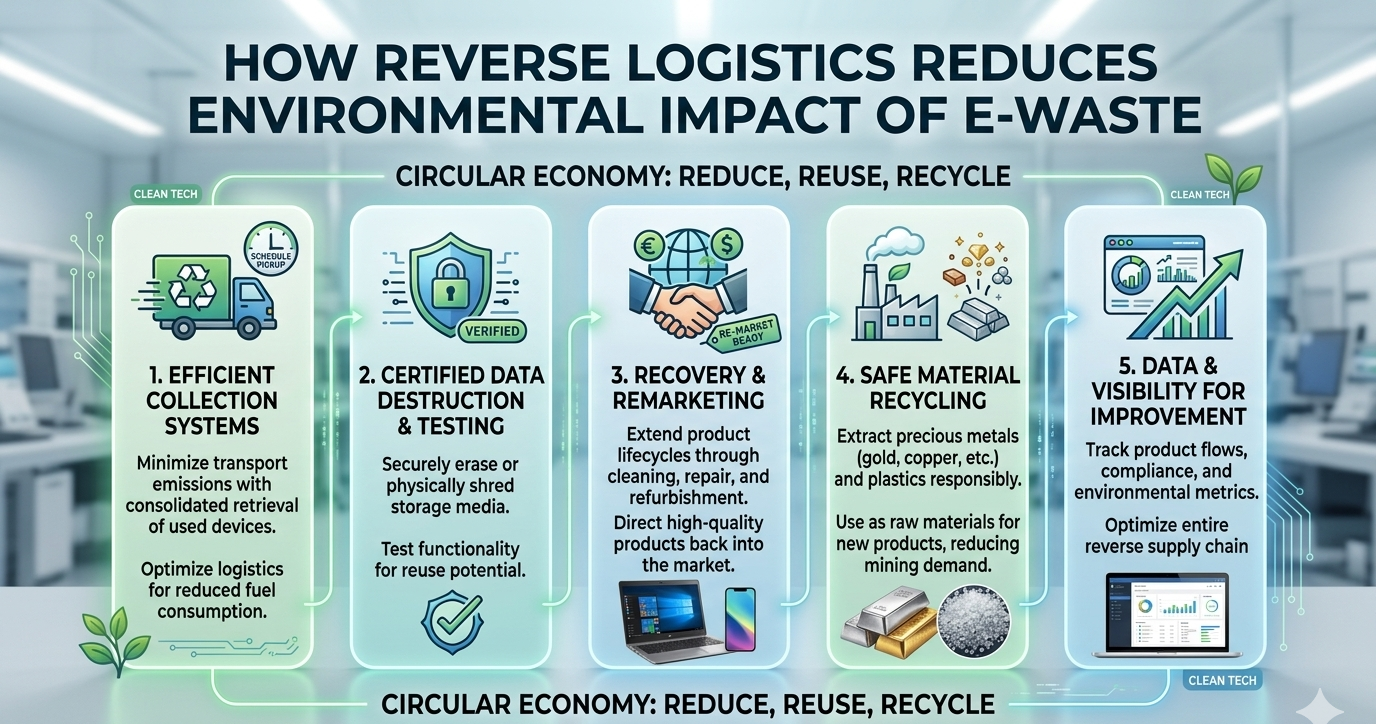
How Reverse Logistics Reduces Environmental Impact of E-Waste
Electronic devices have shorter lifecycle periods than ever before due to rapid innovation, changing consumer expectations, and frequent hardware upgrades. As a result, millions of electronic products are discarded every year, creating enormous pressure on waste management systems and environmental resources.
Improper disposal of electronic waste can have serious environmental consequences. E-waste contains valuable recoverable materials such as copper, aluminum, gold, and plastics, but it may also include hazardous substances that can contaminate soil, air, and water if not managed responsibly. The increasing complexity of electronic products has made sustainable disposal and recovery processes more important than ever.
In response to this challenge, reverse logistics has emerged as a critical solution in modern e-waste management. Reverse logistics focuses on the movement of used, obsolete, damaged, or end-of-life electronic products from consumers back through the supply chain for reuse, refurbishment, recycling, or responsible disposal. As businesses and governments increasingly prioritize sustainability, reverse logistics is becoming a key component of circular economy initiatives and environmentally responsible IT asset management strategies.
Understanding Reverse Logistics in E-Waste Management
Reverse logistics refers to the process of collecting, transporting, sorting, refurbishing, recycling, or responsibly disposing of products after they have reached the end of their useful lifecycle.
In the context of e-waste management, reverse logistics includes activities such as:
- Collection of obsolete electronic devices
- Transportation of end-of-life equipment
- IT asset recovery
- Refurbishment and repair
- Recycling and material recovery
- Data destruction and sanitization
- Responsible disposal of hazardous components
The goal of reverse logistics is not simply waste removal. Instead, it focuses on recovering maximum value from electronic products while minimizing environmental harm.
This process supports the principles of sustainable materials management and circular economy systems, where products and materials are reused for as long as possible instead of being discarded prematurely.
As electronic waste volumes continue increasing globally, reverse logistics is becoming essential for reducing landfill dependency, conserving resources, and improving environmental sustainability.
A major challenge is that a large percentage of electronic waste is still processed through informal or unregulated channels in many regions. Unsafe dismantling methods, open burning, and improper disposal practices can release toxic substances into the environment and create health risks for workers and surrounding communities.
At the same time, electronic waste also contains valuable recoverable materials that can be reused in manufacturing and industrial applications. Improper disposal results in both environmental damage and resource loss.
Reverse logistics helps address these issues by creating organized systems for collection, transportation, recovery, and environmentally responsible processing of obsolete electronic products.
How Reverse Logistics Supports Sustainable E-Waste Collection
One of the biggest challenges in e-waste management is efficient collection. Many consumers and organizations store unused electronics for years or dispose of them improperly because they lack access to structured recycling channels.
Reverse logistics creates organized collection systems that make responsible disposal more accessible. Businesses can schedule pickups for obsolete equipment, centralized collection centers can gather discarded devices, and logistics networks can transport electronic waste safely to authorized recycling facilities.
Structured collection systems prevent electronic waste from entering landfills or informal recycling channels where environmental risks are significantly higher. Efficient reverse logistics networks also improve traceability and accountability throughout the recycling process, ensuring electronic products are processed responsibly.
Reducing Landfill Waste Through Product Recovery
One of the most significant environmental benefits of reverse logistics is the reduction of landfill waste.
Large quantities of electronic devices still contain reusable components or recyclable materials even after they are retired from active use. Without reverse logistics systems, many of these devices end up in landfills where hazardous substances may leak into surrounding ecosystems.
Reverse logistics enables products to be assessed for refurbishment, repair, component recovery, or material recycling before disposal decisions are made. Devices that remain functional can often be refurbished and reused, extending product lifecycles and reducing unnecessary waste generation.
Products that cannot be reused are dismantled so valuable metals, plastics, and materials can be recovered and reintroduced into manufacturing processes. This significantly reduces landfill dependency while promoting more sustainable resource utilization.
Supporting the Circular Economy
The circular economy is a sustainability model focused on extending product lifecycles, reducing waste, and maximizing resource recovery. Reverse logistics plays a central role in enabling circular economy practices within the electronics industry.
Instead of following a traditional “take-make-dispose” model, reverse logistics allows electronic products to move back through the supply chain for reuse, refurbishment, remanufacturing, and recycling.
This approach reduces demand for virgin raw materials while increasing the reuse of existing resources. Recovered metals and components can be reintegrated into manufacturing systems, reducing environmental impact associated with mining and industrial extraction.
By keeping products and materials in circulation for longer periods, reverse logistics helps create more sustainable technology ecosystems. As businesses increasingly adopt circular economy initiatives, reverse logistics is becoming a critical operational strategy for sustainable IT asset management.
Conserving Natural Resources Through Material Recovery
Electronic products contain valuable materials including gold, silver, copper, aluminum, steel, and plastics. Manufacturing new electronic devices requires extensive mining, industrial processing, and energy consumption to extract and refine these raw materials.
Reverse logistics supports material recovery processes that reclaim reusable resources from end-of-life electronics. Recovered materials can then be reused in manufacturing, reducing the need for additional resource extraction.
This conservation of natural resources helps minimize environmental degradation caused by mining activities, deforestation, water usage, and industrial pollution. Efficient reverse logistics systems therefore contribute directly to resource sustainability while reducing the environmental footprint of electronic manufacturing.
Preventing Hazardous Environmental Contamination
Electronic waste may contain hazardous substances such as lead, mercury, cadmium, and certain flame retardants. When e-waste is improperly dismantled, burned, or dumped in landfills, these substances can contaminate air, soil, and water sources.
Informal recycling operations without proper environmental controls often expose workers and nearby communities to serious health risks. Reverse logistics helps prevent such environmental contamination by directing electronic waste toward authorized recycling facilities equipped to handle hazardous materials safely.
Certified recycling processes ensure dangerous components are isolated, treated, and disposed of according to environmental regulations and industry standards. This reduces public health risks while supporting environmentally responsible waste management practices.
Reverse Logistics and Regulatory Compliance
Governments across the world are introducing stricter regulations related to e-waste disposal, recycling standards, and Extended Producer Responsibility (EPR). Businesses are increasingly required to ensure electronic waste is managed through authorized and environmentally compliant channels.
Reverse logistics systems support regulatory compliance by creating traceable and accountable processes for collection, transportation, recycling, and disposal. Proper documentation, chain-of-custody procedures, and certified recycling practices help organizations demonstrate compliance with environmental regulations and data security requirements.
This is especially important for enterprises handling sensitive information, large-scale IT assets, or regulated electronic equipment.
How Greentek Reman Supports Sustainable Reverse Logistics
Greentek Reman plays an important role in supporting environmentally responsible e-waste management through its reverse logistics, IT asset disposition, refurbishment, recycling, and resource recovery solutions.
The company focuses on creating structured reverse logistics systems that help organizations manage obsolete electronics in a secure, compliant, and sustainable manner. Its services support the complete lifecycle of end-of-life electronic products, from collection and transportation to refurbishment, recycling, and responsible disposal.
One of the company’s key strengths lies in its focus on maximizing asset recovery and promoting reuse wherever possible. By extending the lifespan of electronic products through refurbishment and remarketing, Greentek Reman supports circular economy principles while reducing landfill waste and resource depletion.
The company also emphasizes certified recycling and environmentally safe processing practices. As an R2v3-certified ITAD and e-waste management company, Greentek Reman follows internationally recognized standards for responsible electronics recycling, data sanitization, and material recovery.
Its PAN-India logistics capabilities further strengthen reverse logistics efficiency by enabling secure collection and transportation of electronic waste across multiple locations. This helps businesses streamline e-waste management while maintaining environmental compliance and operational transparency.
By combining reverse logistics expertise, sustainable recycling practices, secure data destruction, and resource recovery capabilities, Greentek Reman helps organizations reduce environmental impact while improving responsible IT asset management.
Conclusion
The growing volume of electronic waste has made sustainable e-waste management a global priority. Improper disposal of obsolete electronics not only creates environmental risks but also leads to resource loss, pollution, and increased landfill dependency. Reverse logistics offers a practical and environmentally responsible solution by enabling the collection, refurbishment, recycling, and recovery of end-of-life electronic products.